
SAN FRANCISCO (KGO) — A San Francisco homeowner is facing a series of fines totaling $50,000 for illegally trimming five trees believed to be on his property.
Trees located right outside his home.
But as the city explains, they’re not his, and he wasn’t authorized to do it.
Paul Dennes was trying to get his property in San Francisco’s Panhandle neighborhood insured.
“I got an email from my broker saying in order for you to qualify for insurance you need to trim the trees so many feet from the property,” Dennes said.
“You thought, OK?” Stephanie Sierra asked.
“Yeah! I’ll just take care of that,” Dennes said.
So Dennes trimmed down five trees in front of his unit that he says were touching the building and, in some cases, even power lines.
“You see that? I wanted to get them out of the power lines. I didn’t want to be responsible for that,” Dennes said.
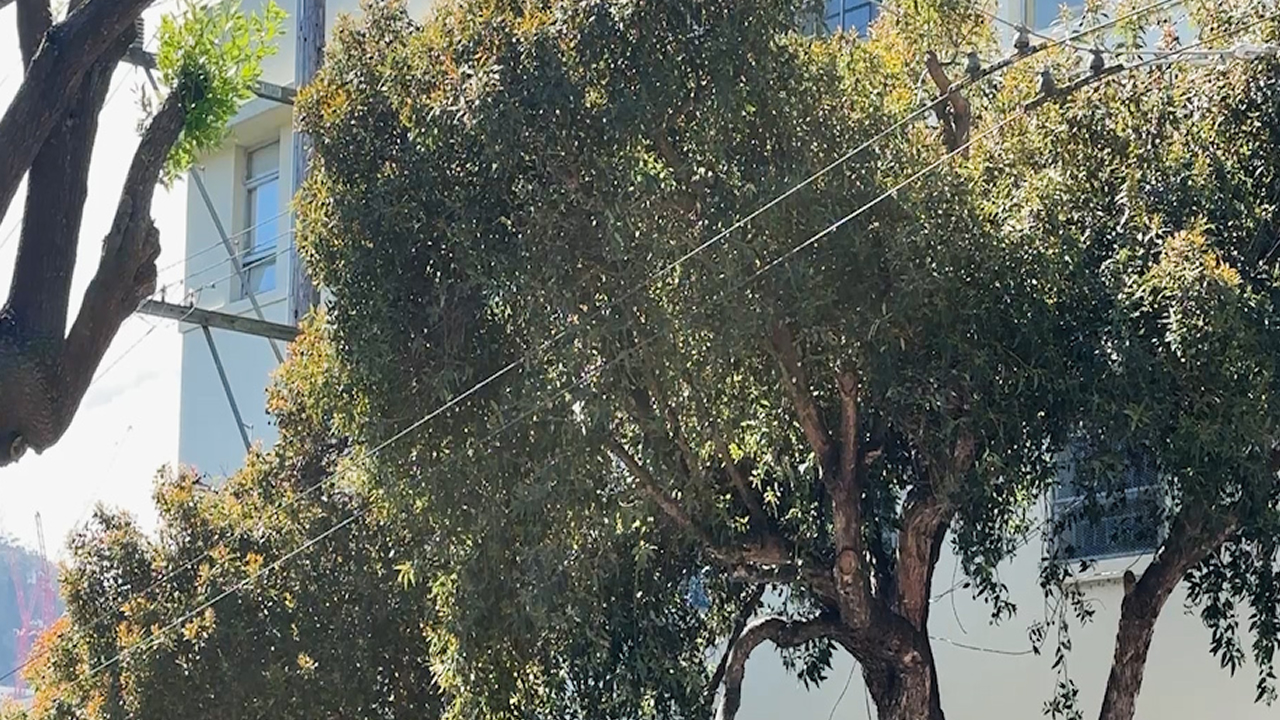
Three trees in front…
“And on the other side,” Dennes said, there were two more.
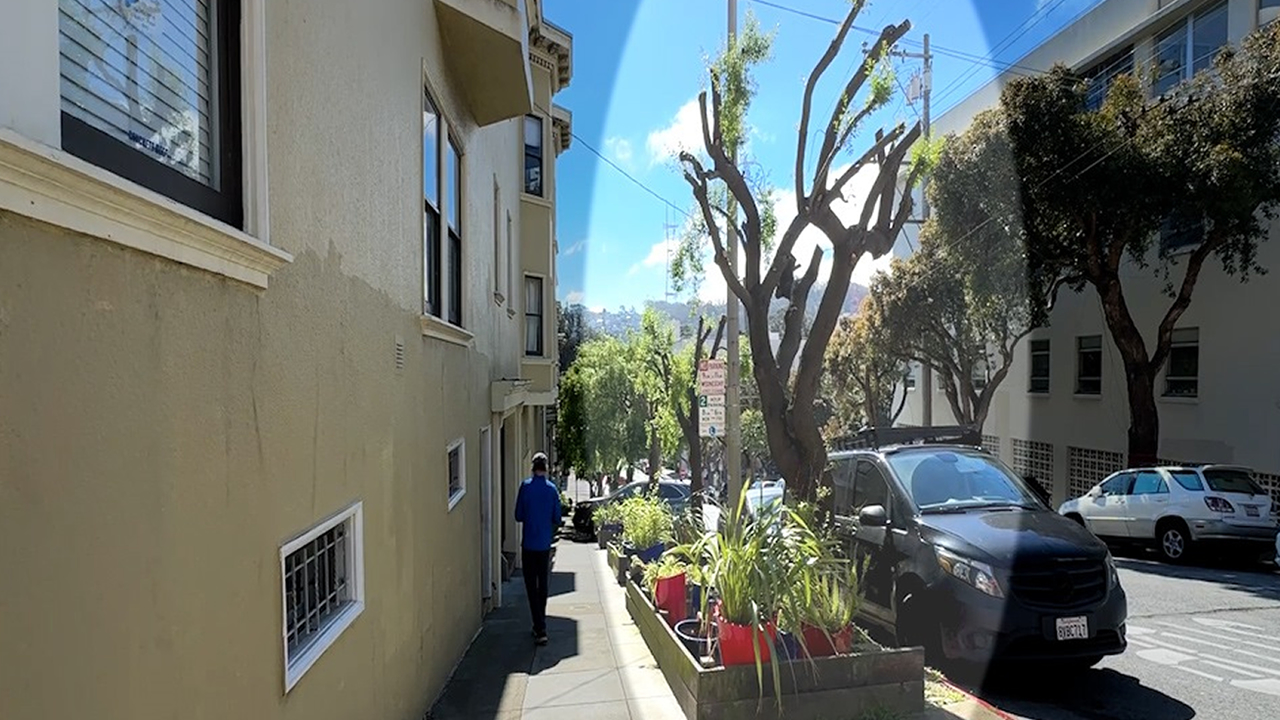
His family has owned the home since 1988. Since then, Dennes always thought it was the property owner’s responsibility to trim.
“I’ve never seen the city trim these trees, never!” Dennes said.
Well, he learned the hard way, not in his case.
The trees aren’t his.
Two days before Christmas last year, Dennes got slapped with the first of several fines from the San Francisco Department of Public Works for illegal tree pruning.
In total, the city charged him $50,000.
“Whoa!” Dennes said. “Shocked. I’m like, are you kidding me? It’s just brutal, you know?”
“It feels like bullying,” he said. “I don’t want to start a big war!”
The city says a neighboring resident advised Dennes against his pruning method and suggested working with a certified arborist. Dennes says he did that. The city says the pruning was subsequently reported by a certified arborist.
The Bureau of Urban Forestry, which operates within the Operations division of San Francisco Public Works, is overseen by a superintendent who is a certified arborist.
Public Works told 7 On Your Side: “As stewards of San Francisco’s urban forest, it is our job to hold people accountable when they harm or damage a street tree… The necessary clearance was achievable without topping, which we demonstrated during the administrative hearing. Tree topping – the indiscriminate cutting of main branches back to stubs, often removing 50% to 100% of a tree’s canopy – can severely damage trees. This practice shocks the tree, limits its ability to produce energy, creates large wounds that invite decay, and often results in hazardous, structurally weak regrowth. In many cases, topping significantly shortens a tree’s lifespan and can increase liability when trees later fail.”
Public Works also added: “An initial Urban Forestry inspector determined the trees had been damaged to the point that removal would be necessary and recommended a fine of $10,000 per tree.”
“I know that the fines have been going up. $10,000 a tree seems like a lot of money,” said Christopher Campbell, a certified tree arborist and owner of CC Tree Design.
“Too high?” Stephanie Sierra asked.
“It seems pretty excessive,” Campbell said.
Campbell helps manage urban trees, offering services such as tree pruning and risk assessments.
“Do you see this tree confusion happen a lot?” Sierra asked.
“Yeah, actually, it’s pretty common. I think as time goes on, people are starting to learn. You know, the fines are really unfortunate,” Campbell said.
Tree trimming used to be under the homeowner’s purview. But the city assumed that responsibility for all public street trees in 2017 following implementation of the StreetTreeSF program approved by voters through Proposition E. The measure allocated more than $19 million annually from the city’s general fund to support street tree maintenance and sidewalk repairs related to tree root damage. The city first adopted pruning standards in 2006, which prohibited topping.
“People don’t realize, but the tree that grows in front of their home on the sidewalk in what we call a sidewalk basin, that’s actually city property. That’s the public right-of-way,” Campbell said.
And Campbell explains even certain trees on private property require a special permit for trimming.
“If there’s a tree that’s over 12 inches in trunk diameter, 20 feet in height or 15 feet in spread, that’s considered a ‘significant tree,’ and those are also protected,” Campbell said.
Public Works says it distributed flyers, door hangers and mailed postcards over the years alerting residents to the 2017 changes. But Dennes, who lives in Marin, says neither he nor his father ever received any notice.
“Kept in the dark!” said Dennes. “Why can’t they put that in with the tax bill?”
The city says “the municipal code doesn’t require” that.
Instead, Public Works refers property owners to its website, where information is posted about maintenance responsibilities, including a street tree map. But the primary owner at the time, Dennes’ father, was 94.
“He didn’t look at websites!” Dennes said. “So I think that’s not reasonable.”
Dennes tried to appeal the $50,000 fine, but he’s frustrated with the process.
“They’ve used photos where they’ve trimmed the trees after I’ve trimmed them,” Dennes said.
“What did they look like before?” Sierra asked.
“They were probably about four feet taller,” Dennes said.
Public Works acknowledges contracted arborists have been sent to Dennes’ street but denies any additional pruning was performed on the trees adjacent to his property.
As for his fine, Public Works told us: “After further review, a more senior inspector determined that the trees may recover, though with reduced lifespan and compromised structure. Based on that assessment, Public Works recommended reducing the fines to $12,950, or $2,590 per tree.”
“The information is out there,” Campbell said.
“I didn’t know. It doesn’t feel fair at all,” Dennes said.
SF Public Works told 7 On Your Side on Wednesday, they’ve lowered the $50,000 fine to $6,475, pending he follows through with a pruning plan.
“We will cut the reduced fine in half, to $6,475, if the property owner follows through with a pruning plan, requiring that the property owner brings in a certified arborist to properly prune the impacted trees over the next five years. The goal is to improve the condition of the trees to extend their life.”
As a general guideline, Public Works recommends that residents allow the Bureau of Urban Forestry to prune street trees located in the public right-of-way, such as on sidewalks.
If you want to arrange pruning outside the city’s maintenance schedule, you can submit a request by contacting Urban Forestry and working with a certified arborist. Requests are reviewed on a case-by-case basis.
Their email address is urbanforestry@sfdpw.org, and the public line is 628-652-TREE (8733).
And if you have a situation like this on your street and are concerned about clearance around power lines, the city says to contact PG&E for assistance.
Plus, if you’re wondering whether you actually own the trees near your property. You can look that up using the Public Works street tree map.
TreesAreGood.org is a great resource for learning about proper pruning, finding local arborists, and understanding why tree topping can be damaging.
Take a look at more stories and videos by 7 On Your Side.
7OYS’s consumer hotline is a free consumer mediation service for those in the San Francisco Bay Area. We assist individuals with consumer-related issues; we cannot assist on cases between businesses, or cases involving family law, criminal matters, landlord/tenant disputes, labor issues, or medical issues. Please review our FAQ here. As a part of our process in assisting you, it is necessary that we contact the company / agency you are writing about. If you do not wish us to contact them, please let us know right away, as it will affect our ability to work on your case. Due to the high volume of emails we receive, please allow 7 to 10 business days for a response.

Copyright © 2026 KGO-TV. All Rights Reserved.
About the Author

Discover more from USA NEWS
Subscribe to get the latest posts sent to your email.


