
SAN FRANCISCO (KGO) — More than a month after an avalanche killed nine skiers in the Sierra, new details are being released about what is believed to have happened on that mountainside on February 17. On Thursday, a final report on the avalanche was released by the National Avalanche Center.
Fifteen people were part of the group in a backcountry area near Lake Tahoe and several Bay Area women and three guides were among the victims. It was the deadliest avalanche in the U.S. in more than four decades, eclipsing the 1982 Alpine Meadows disaster, where seven died.
RELATED: Bodies of all 9 missing skiers in deadly Castle Peak avalanche have been recovered
In it, the report says, “There were no broken trees visible within the avalanche debris or encountered during excavation of the victims. It is unclear if this avalanche was triggered by the party or was a natural avalanche…”
It also concluded that, “This group traveled below avalanche terrain and through the runout zone of an avalanche path during a period when a natural or human triggered avalanche was likely to very likely.”
ABC7 Eyewitness News spoke with Dale Atkins, who has more than 50 years of mountain rescue experience in Evergreen, Colorado and is currently a technical specialist with the Alpine Rescue Team.
“Most avalanche accidents are triggered by the victim or somebody in their group, or by the group, but when you have these tremendous winds happening at the ridgelines, with tremendously heavy snow, that’s when natural releases happen,” Atkins said.
RELATED: Investigation of deadly Castle Peak avalanche to review whether criminal negligence played a role
The report says that eight of the nine victims who died were found buried in three to eight-foot-deep snow in a 20-by-20 foot area.
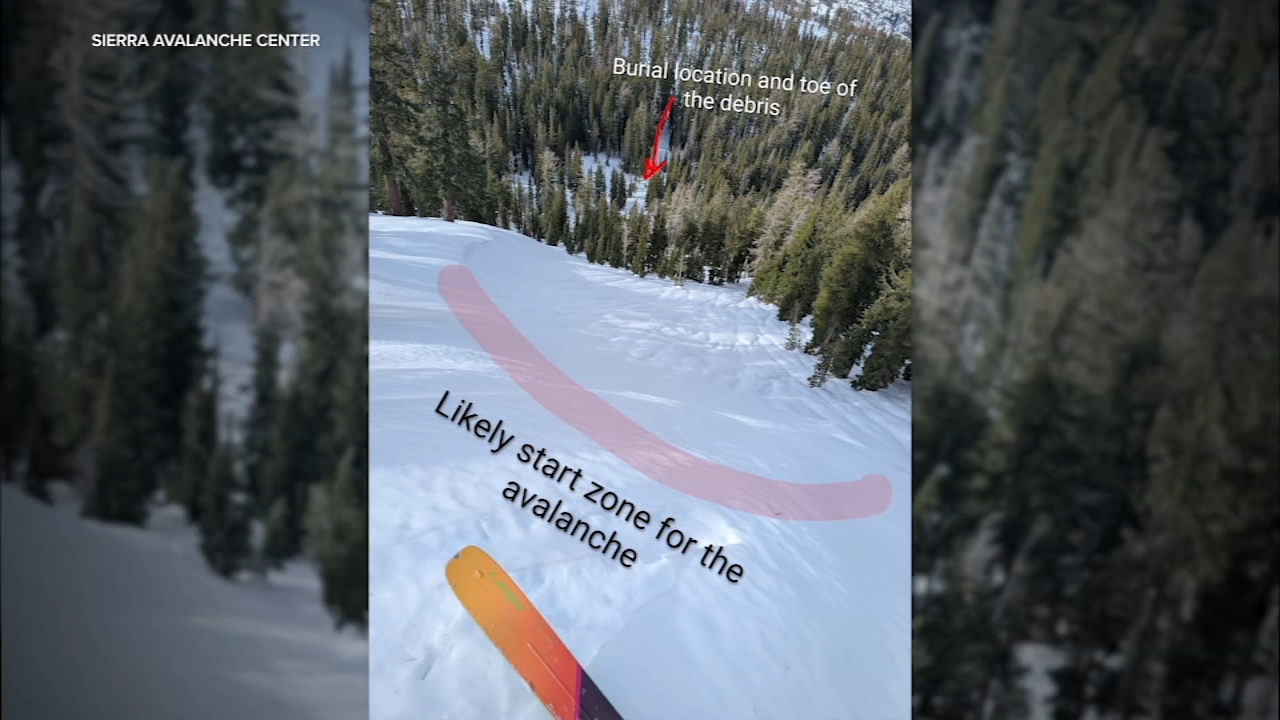
Some of them even had safety equipment, including airbag backpacks that could have potentially saved their lives, but none were deployed.
Atkins says with their low location on the slopes, it’s unlikely they would have worked even if the group was prepared.
“And it’s probably because they couldn’t see anything, and then they all of a sudden are just, the rug goes out from underneath them, they’re hit by this wall of snow, and they’re tumbling and fighting for their lives. And they never had a chance to deploy the airbags,” he said.
The report acknowledges the work of survivors who saved others by digging them out.
ABC7 Eyewitness News spoke with one of the six survivors Thursday night. He was one of two delayed because of an equipment failure, so he wasn’t hit by the avalanche. He said the winds were so strong the huts they were in were shaking. He said he was not aware of any conversation about staying in the huts and waiting out the storm.
RELATED: Castle Peak avalanche: SJSU professor explains how snow drought helped set stage for deadly incident
The report also detailed the harsh conditions hitting the Sierra at the time of the avalanche, saying, “Wind speeds for the previous hour averaged 75.6 mph with a maximum gust of 125.8 mph at the top of the Siberia Chairlift.”
Those wind speeds were at the top of Palisades Tahoe resort, but Atkins says down mountain where the skiers were, it’s unlikely the wind speeds were that fast.
“But visibility to them would have been like trying to navigate through a room full of foam,” he said. “That makes me also think that they probably did not suspect that they were in an avalanche runout zone, or even the bottom of an avalanche track.”
The San Francisco Chronicle says that the report confirms the guides led the group through a more avalanche-prone area, when two safer routes were available.
The report commented on the dangers of how the group was traveling, saying, “Exposing only one person at a time to avalanche terrain is an accepted best practice for backcountry travel. This group consisted of 15 people. Analysis of past avalanche accidents has indicated that larger group sizes (4 or more people) have higher chances of being caught in avalanches.”
As to why certain decisions were made, the report says, “Many of the details surrounding this accident remain unknown, especially concerning human factors, decision making, travel plans, specifics of the avalanche, etc. As more details emerge over time, more learning opportunities will present themselves.”

Copyright © 2026 KGO-TV. All Rights Reserved.
About the Author

Discover more from USA NEWS
Subscribe to get the latest posts sent to your email.


