
A pair of San Diego parents are going to prison for the death of their baby girl Delilah. Both were convicted of second-degree murder Thursday afternoon.
Brandon Copeland and Elizabeth Ucman have been jailed since the baby died in late 2021. Prosecutors say their 3-month-old weighed only just under 4 pounds at the time of her death, which was half of what she weighed when she was born.
The trial was unique because each defendant had their own jury, which independently decided each of their fates. Though the couple was initially charged with first-degree murder, prosecutors modified that during the trial, only seeking a second-degree murder conviction.
Each jury had the option to convict on that charge, or a lesser one like involuntary manslaughter or some form of criminal negligence. But both went with second-degree murder, which typically carries a sentence of 15 years to life in prison. Sentencing could happen as early as this April.
The crux of the case before jurors was if the parents should be held fully accountable for Delilah’s death, or if a combination of mental health issues and perceived failures by social workers contributed enough to mitigate the punishment.
NBC 7
NBC 7
The case against Delilah’s parents
Throughout the trial, jurors were shown graphic evidence. That included San Diego police body camera video, which showed the limp body of baby Delilah inside a filthy apartment in City Heights. Crime scene photos revealed piles of trash, spoiled food and animal feces strewn throughout the apartment.
For the first month of her life, Delilah was in the care of her great-aunt, who begged to take the child until the couple cleaned their apartment. During that time, reports were made to the San Diego County Child and Family Well-Being Department (Child Welfare Services at the time).
Many of the details from the trial had been revealed after NBC 7 Investigates successfully won a court ruling to gain access to the county’s social worker case files. They revealed that social workers created a safety plan for Delilah that the parents agreed to as part of Voluntary Services with the county.
That’s a type of social worker supervision in cases where children are at risk of abuse, neglect or exploitation. Children may either safely remain in the home or in a voluntary out-of-home placement.
Documents stated that the parents agreed they wouldn’t get Delilah back until the home was clean and safe. A month later, that happened, against the fervent pleas of family members, who told social workers that both Copeland and Ucman were unfit because they were immature and suffered from a slew of mental health issues.
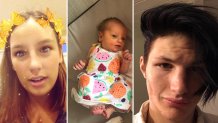
NBC 7
NBC 7
While they initially kept in contact with family members and social workers, Deputy District Attorney Franciesca Balerio said they broke off contact over the next couple of months.
The case files revealed that the last time Delilah was seen by a social worker was 55 days before her November 10, 2021, death. Delilah’s great-grandmother, Adrienne Arnett, told NBC 7 Investigates that she believes the system failed her — that the county should have stepped in to remove Delilah from the home.
NBC 7 Investigates reached out to the county multiple times in 2023, asking to have a conversation about what happened in this case and discuss departmental policies. It repeatedly declined to comment or make staff available for questions.
In his closing statement on Monday, Ucman’s defense attorney Anthony Parker said his client never intended to hurt Delilah. Instead, he pointed to Ucman’s traumatic past and mental health issues, saying she suffered childhood abuse and neglect at the hands of her mother.
Parker said Ucman suffered from a long history of mental illness, including serious postpartum depression after Delilah was born. He said the signs were there for social workers to recognize.
“This is a case about two broken people and a broken system,” Parker said. “I think it’s appropriate to be just a little outraged at how the system failed.”
NBC 7’s Alexis Rivas looks into recently-unsealed county files that reveal what case workers did and didn’t do to protect Delilah.
In her closing statement for Ucman’s jury, Balerio said, “She actively prevented and prohibited other people from intervening and helping … Starvation does not happen in an instant. It happens slowly, visibly, painfully, day after day.”
On Tuesday, during closing arguments for Copeland, Balerio told jurors, “Her father denied her the one thing she needed to survive: nourishment.”
Copeland’s defense attorney, Courtney Cutter, also painted her client as the product of an incredibly abusive and traumatic childhood, which included sexual abuse and being bounced around foster care homes until he aged out the system.
Cutter repeatedly laid the blame on San Diego County social workers, alleging that workers didn’t take appropriate action to protect Delilah.
“At the end of the day, nobody wanted Delilah to die. Everybody failed her,” Cutter said. “Delilah had a village, but I would insist to you it was an ineffective one.”
Cutter said there was evidence presented during the trial that showed that both Copeland and Ucman tried to care for Delilah, but were ill-equipped to do so.
“They believed they could figure out how to do this thing on their own,” Cutter said. “Trying is not malice.”
In rebuttal, Balerio downplayed criticism for county social workers, and said, “The system broke down is what we hear … that is not what the evidence in this case showed.”
About the Author

Discover more from USA NEWS
Subscribe to get the latest posts sent to your email.


