Leucadia may be known today for its surf breaks, eclectic Highway 101 storefronts, and laid-back coastal energy. Long before it became a North County lifestyle destination, however, it was farmland, a railroad stop, and roadside lodging for travelers heading down the California coast.
Tucked along the northern edge of Encinitas, this seaside community has evolved over more than a century — yet pieces of its early story remain if you know where to look.
Here are five historical clues that reveal how Leucadia took shape.
Its Name Comes From a Greek Island

Leucadia was named after Lefkada — historically also spelled Leucadia — a Greek island in the Ionian Sea. During Southern California’s 1880s land boom, developers often chose romantic European names to market coastal property to prospective buyers. The name was meant to evoke Mediterranean beauty and seaside charm.
It has remained ever since, including after Leucadia became part of the city of Encinitas when the city incorporated in 1986.
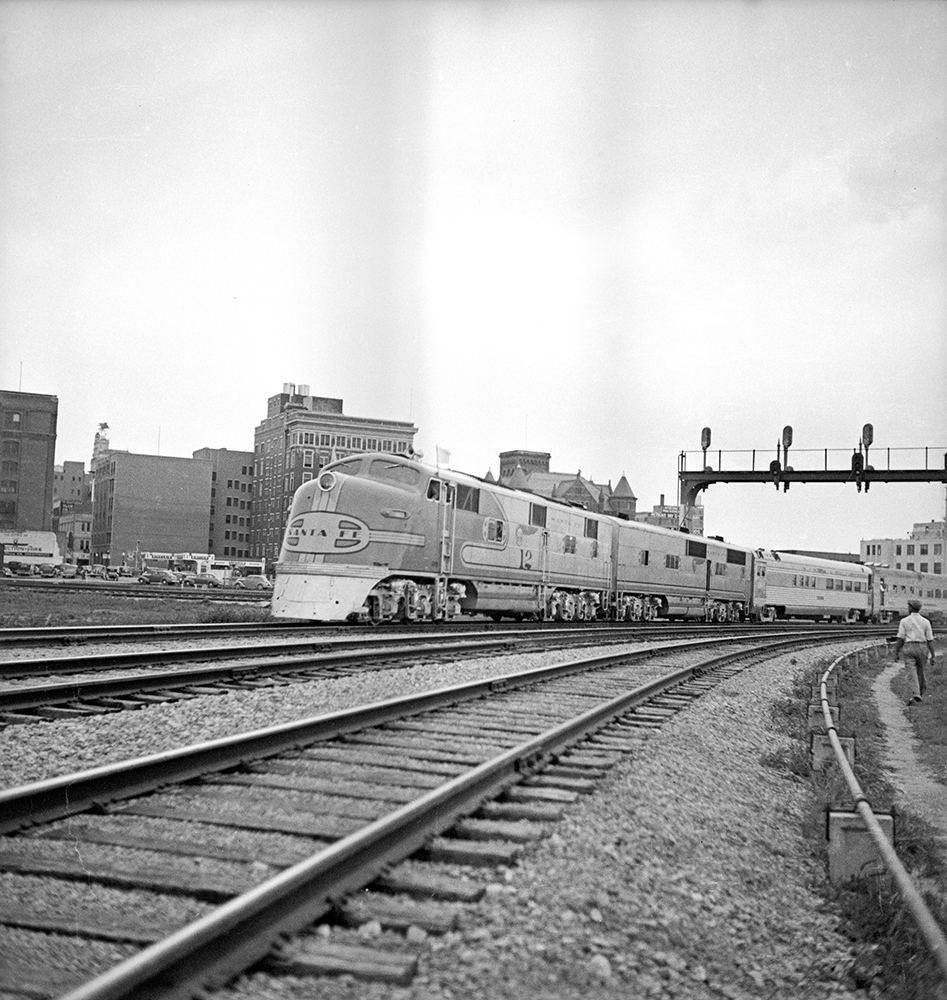
An Atchison, Topeka, and Santa Fe Railway diesel-electric passenger locomotive departs a downtown station, mid-20th century. Rail lines helped connect coastal North County communities such as Leucadia and Encinitas to the rest of Southern California. (Photo via Wikipedia/Public Domain)
The Railroad Connected It to the Region

The arrival of the Atchison, Topeka, and Santa Fe Railway in the 1880s helped transform the region from relatively isolated agricultural land into a connected coastal community.
Rail access made settlement more practical and commerce possible. Farmers shipped crops — including citrus and avocados — to Los Angeles and other growing markets. The rail corridor that once carried produce continues to define the coastal landscape today, running parallel to the Pacific.
Log Cabins Welcomed Early Highway Travelers

In the late 1920s and 1930s, a cluster of red log cabins operated as a roadside auto court along U.S. Highway 101, serving motorists exploring California’s expanding coastal route.
The cabins became a recognizable stop for travelers moving between Los Angeles and San Diego during the early automobile era. Though no longer operating as lodging, the structures still stand today as private residences — one of the most distinctive surviving reminders of Leucadia’s roadside past.
Motor Lodge Design Still Lines Highway 101

Another vestige of early car culture can be seen in the Leucadia Beach Inn, which reflects the classic mid-20th-century motor lodge layout. In this design, guest rooms are arranged around a central courtyard, allowing motorists to park directly outside their doors — a hallmark of 1930s through 1950s highway travel.

The building stands as an example of the period when Highway 101 served as the primary coastal route through San Diego County, long before Interstate 5 redirected most regional traffic inland.
Its Independent Spirit Has Long Roots

By the mid-20th century, Leucadia had developed a reputation as a haven for surfers, artists, and independent thinkers drawn to its ocean views and modest housing. Compared with more tightly planned coastal communities, Leucadia evolved organically — shaped by agriculture, rail travel, roadside tourism, and beach culture.
That creative, less-regulated atmosphere became part of its identity and remains visible today in its mix of cottages, local businesses, and blufftop streets overlooking the Pacific.
Leucadia’s history isn’t preserved in grand monuments. It lives in cottages tucked behind palms, in rail lines running parallel to the sea, and in the enduring rhythm of Highway 101 itself.

Sources
City of Encinitas incorporation records (1986).
Regional history of the Atchison, Topeka, and Santa Fe Railway.
Leucadia 101 Main Street Association historical materials.
San Dieguito Heritage Museum archives.
For more historical stories about the region, visit here.
About the Author

Discover more from USA NEWS
Subscribe to get the latest posts sent to your email.