
The Community Center has been closed since Superstorm Sandy hit New York City in 2012. Major flooding destroyed the basketball court where kids used to shoot hoops, and shut down gathering spaces where senior citizens could meet.
Tyra-Jasmine Boisson remembers hula-hooping in the gym and playing board games while she waited in the Hammel Houses’ Community Center for her mom to pick her up.
“They had great hot dogs, great burgers—get as many as you want, drinks, unlimited for the kids,” said Boisson. “It was great. I loved it.”
Boisson is in her 30s now, but she still lives on the NYCHA campus that she moved to when she was 7. She says she’s always really liked living there, a block away from the beach on the Rockaway peninsula. But for more than a decade, kids growing up at the Hammel Houses haven’t had the same experience as Boisson.
The Community Center has been closed since Superstorm Sandy hit New York City in 2012. Major flooding destroyed the basketball court where kids used to shoot hoops, and shut down gathering spaces where senior citizens could meet. The Hammel Houses are one of 35 NYCHA properties that were damaged by Sandy and received aid from the Federal Emergency Management Agency.
NYCHA says that it has also invested $184 million into improvements to the Hammel Houses in the past 10 years. In 2024, after completing repairs on the facility’s gym, the authority attempted to reopen the center, but said the basketball court floor was damaged in the process, according to a spokesperson.
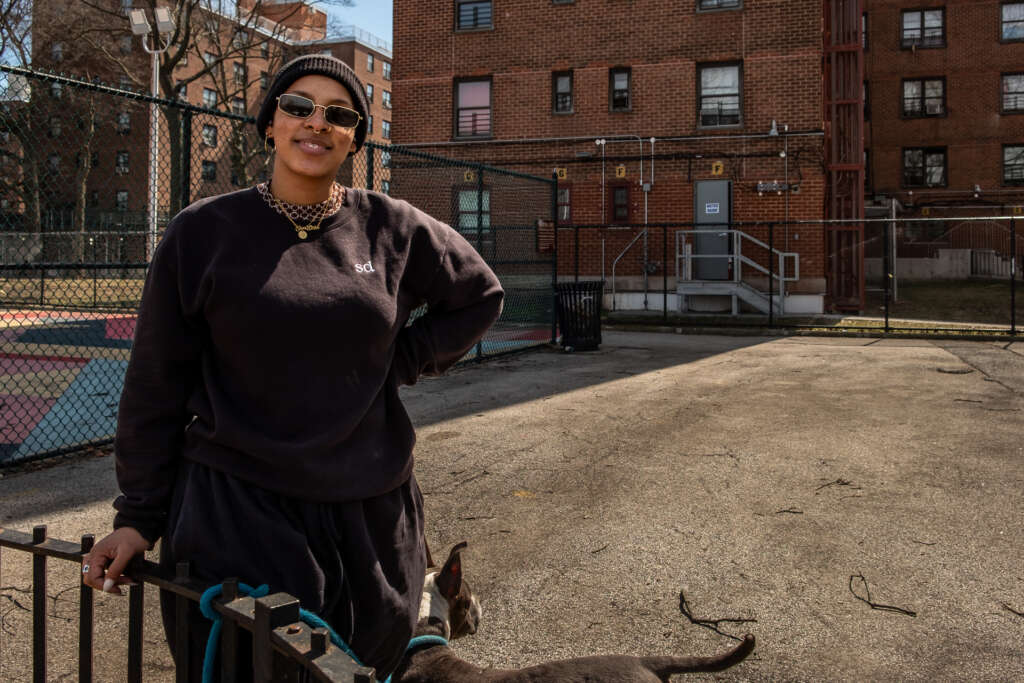
Restoration to the basketball court should be completed this spring. But this doesn’t mean the facility will be ready to reopen—the heating, ventilation and air conditioning system needs a full replacement, and the authority did not provide a timeline for that work. “We are working with elected officials and our city partners to address the HVAC system replacement,” the spokesperson said.
For the residents of the 712 apartments in the Hammel Houses, this missing resource is a disservice to them, according to Felicia Johnson, district manager of Community Board 14.
“I’m sure that they probably feel somewhat forgotten,” Johnson said. “Like they’ve given up and that nobody really cares.”
NYCHA has limited resources for repairs because the federal public housing program that funds it, Section 9, has been under-resourced for decades. With Congress unlikely to substantially boost the budget for Section 9, NYCHA has been transferring some properties to Section 8—another federal housing program with more government money attached to it, though the conversions have been sometimes controversial.
Hammel Houses, which remains in Section 9, needs an estimated $578,000 in repairs per apartment over the next 20 years, more than the average NYCHA development, according to the authority’s online capital tracker.
The community center wasn’t just a place for recreation; it allowed people to perform their civic duty. For years, the space also served as a polling station, and many residents recall voting there even after the center was flooded. But the facility hasn’t opened its doors for residents to vote in recent elections, and this is tough for elderly voters.
“It’s farther for me to walk,” Phyllis Bennett said. “I’m 70 years old.”
Bennett has been living in the complex since 2002. She used to take her granddaughter to the community center while her mom was working. It gave her very shy 4-year-old granddaughter a chance to socialize.
“I’ve always believed that in a community like this, when you’re living in housing, you need something to grab a hold of these children, their mind, their attention,” Bennett said. “Something other than just going outside, standing on the corner.”
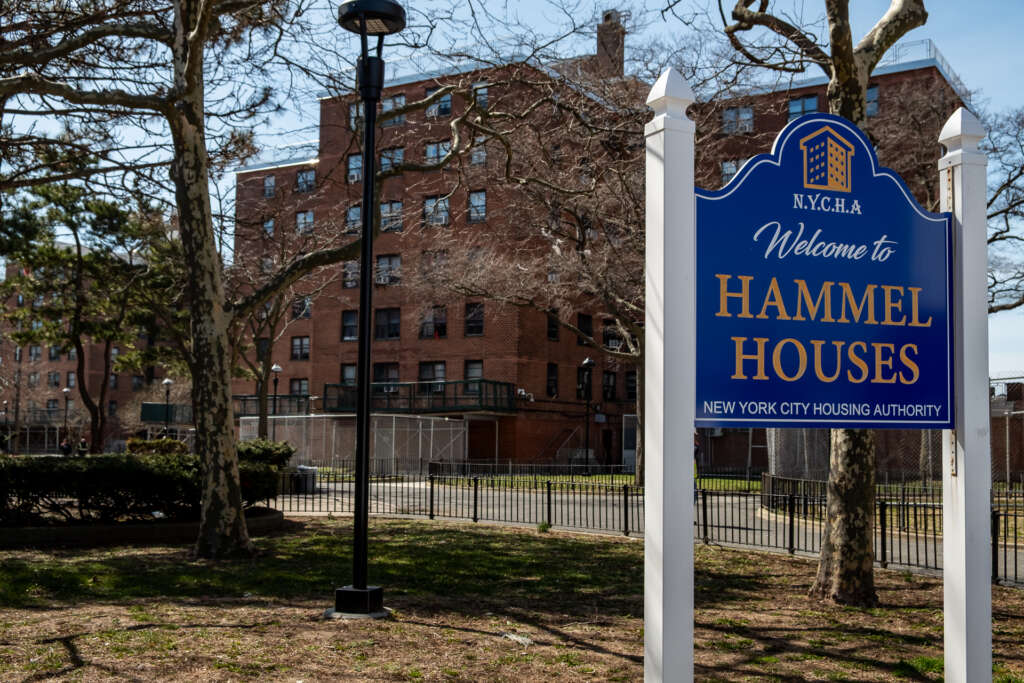
Even with the community center closed, there are movie nights for kids and activities in other locations on campus. But residents feel that the Hammel Houses today lacks a sense of community.
When Felicia Stevens, 34, first lived in the complex, her son attended summer camps and other kids-friendly programs, even after the community center was damaged. But the family moved away for a few years and recently came back, and Stevens says her teenage son hasn’t integrated into the community again.
“He only makes friends at school. He don’t really come outside too much,” Stevens said. “It would be nice for him to meet someone in the community.”
When the community center reopens, Stevens hopes there will be bingo. Like her son, she too would like to meet and make friends with her neighbors.
Alex Pastor, 45, lives in the complex with his 12-year-old son. He says he avoids playing basketball on the courts closest to his apartment and goes across the street, near the beach, where he feels safer. “Once you get to live around here and you know the area, you start to become a little aware of everything that’s happening,” Pastor said. “This is why people stick to themselves.”
But he says he’s not opposed to giving the community a chance. He’d like for his son to have a safe place to play basketball right near his home. Recently, he says, NYCHA workers have been noticeably more present around the campus attending to maintenance.
“They’ve been cleaning up, they’ve been fixing, they’ve been trying,” Pastor said. “So I guess if we do get the community and the families more involved in the neighborhood, more involved, then maybe we’ll see more progress.”
To reach the editor, contact [email protected]
Want to republish this story? Find City Limits’ reprint policy here.
!(function (f, b, e, v, n, t, s) {
if (f.fbq) return; n = f.fbq = function () { n.callMethod ? n.callMethod.apply(n, arguments) : n.queue.push(arguments); };
if (!f._fbq) f._fbq = n; n.push = n; n.loaded = !0; n.version = “2.0”; n.queue = [];
t = b.createElement(e); t.async = !0; t.src = v; s = b.getElementsByTagName(e)[0]; s.parentNode.insertBefore(t, s);
})(window, document, “script”, “https://connect.facebook.net/en_US/fbevents.js”);
fbq(“init”, “606610964404175”);
fbq(“track”, “PageView”);
About the Author

Discover more from USA NEWS
Subscribe to get the latest posts sent to your email.


