
Josh Robertson remembers the first time his family saw a food delivery robot. It was out of the window of their Lincoln Park home, bumbling along across the street.
“It felt futuristic,” Robertson said.
But he said that amusement wore off the first time they needed to step out of a robot’s way on the sidewalk.
“That immediately raised a lot of questions for me, about what the effect these robots might be for Chicagoans of all stripes — who depend so heavily on sidewalks for getting around, for enjoying our neighborhoods and for doing business,” Robertson said.
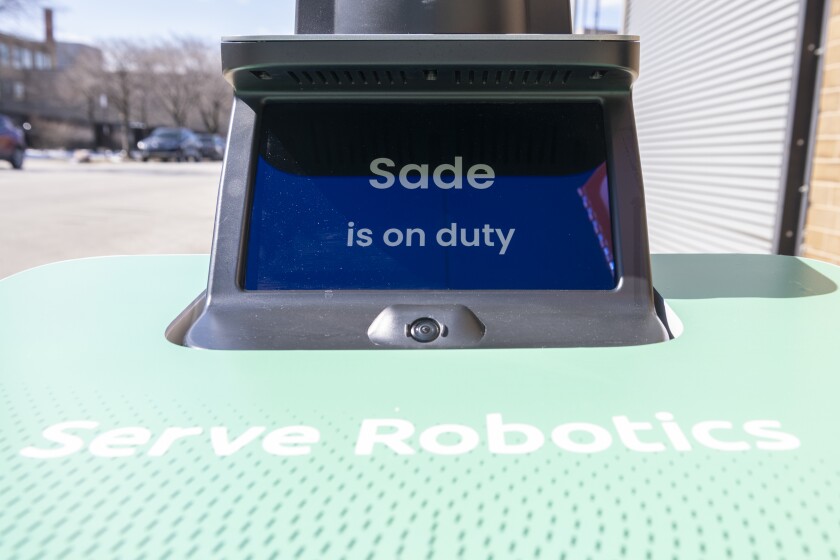
Two companies — Coco Robotics and Serve Robotics — are operating bots on Chicago’s north and west sides under a pilot program City Council passed in 2022. Coco came to town in 2024, and Serve started deploying its fleet last September. Coco’s bots are always virtually monitored by a human, while Serve’s largely drive themselves, with humans stepping in when necessary.
Coco, Serve and the city market the bots as a safer and more sustainable option for short-distance delivery by taking cars out of the equation. But critics like Robertson are concerned about how they could make Chicago’s sometimes narrow sidewalks inaccessible — and whether they’d take away jobs from humans. He launched a petition to pause the program until after a public hearing. So far, the petition has garnered about 3,700 signatures.
Serve Robotics CEO Ali Kashani told WBEZ that he’s aware of the push back and the company is open to engaging with concerned Chicagoans.
“People can reach out to us,” Kashani said. “Every email is responded to.”
He says that the company hopes to create new jobs, and they are committed to improving the bots “in the most responsible way.”
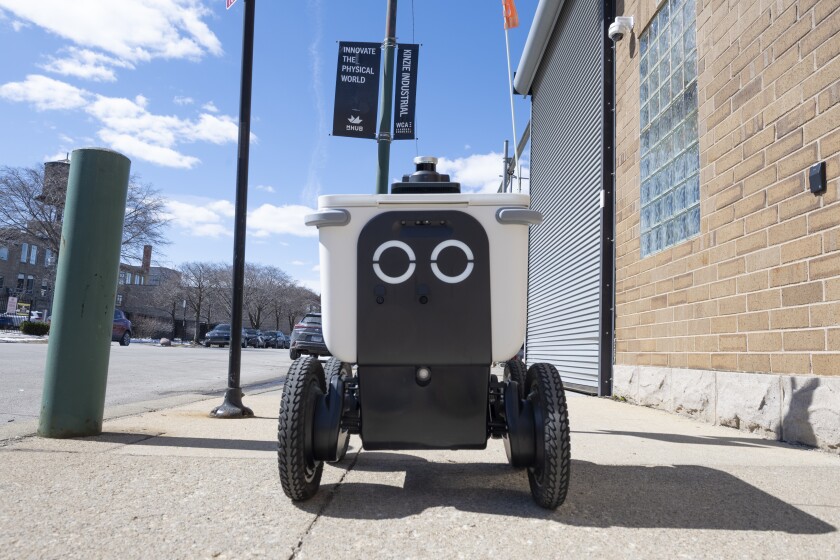
Serve deploys about 75 bots every day. Alex Nelson, who manages the company’s Chicago fleet and has lived in the city for 15 years, said he wants Chicago to be “part of the conversation” around autonomous delivery — and how to reduce car traffic.
“I’m never going to stop hearing what those people have to say,” Nelson said. “But I also want to make sure that if you’re, like, ‘no, I don’t want bots, period,’ then that burrito that that bot is delivering is showing up in a car or a truck or something else. Are you okay with that?”
A spokesperson for Coco Robotics said in a statement that its mission remains to “make local delivery safer, more sustainable, and more cost-effective.”
What happens with the bots now is unclear. Coco and Serve tried to expand into the entire 1st Ward earlier this year, but Alderman Daniel La Spata announced that they would not be allowed to expand after 83.7% of residents who responded to a survey strongly disagreed with the plan.
The pilot program – managed by the Chicago Department of Transportation and the city’s Business Affairs and Consumer Protection office – won’t continue past May 2027 without City Council approval.
BACP declined WBEZ’s request for an interview. CDOT said in a statement that both offices review monthly reports from Coco and Serve.
For his part, Robertson wants to see Chicagoans decide what’s best for the city and these robots.
“We’re asking the city to pause the program until it’s released data on safety and accessibility, held a public hearing on the potential job impacts associated with the robots, and based on all of that, put clear rules in place to ensure that our sidewalks — the public way in Chicago itself — remain people first,” he said.
About the Author

Discover more from USA NEWS
Subscribe to get the latest posts sent to your email.


