
Greg Huse is the urban forester at Arlington National Cemetery, where he oversees 300 different species of trees.
In the D.C. region, conversations often start with, “What do you do?” WTOP’s “Working Capital” series profiles the people whose jobs make the D.C. region run.
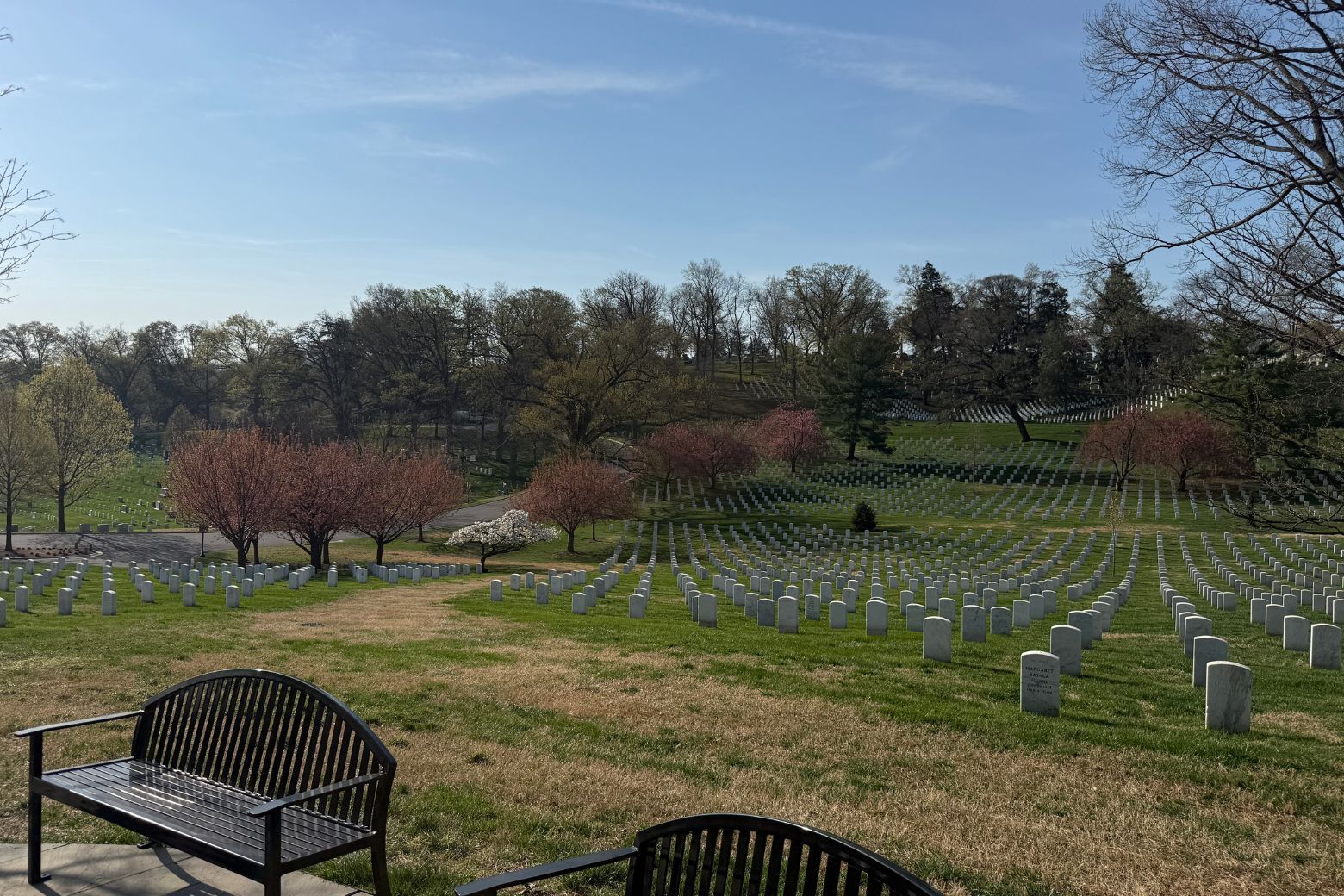
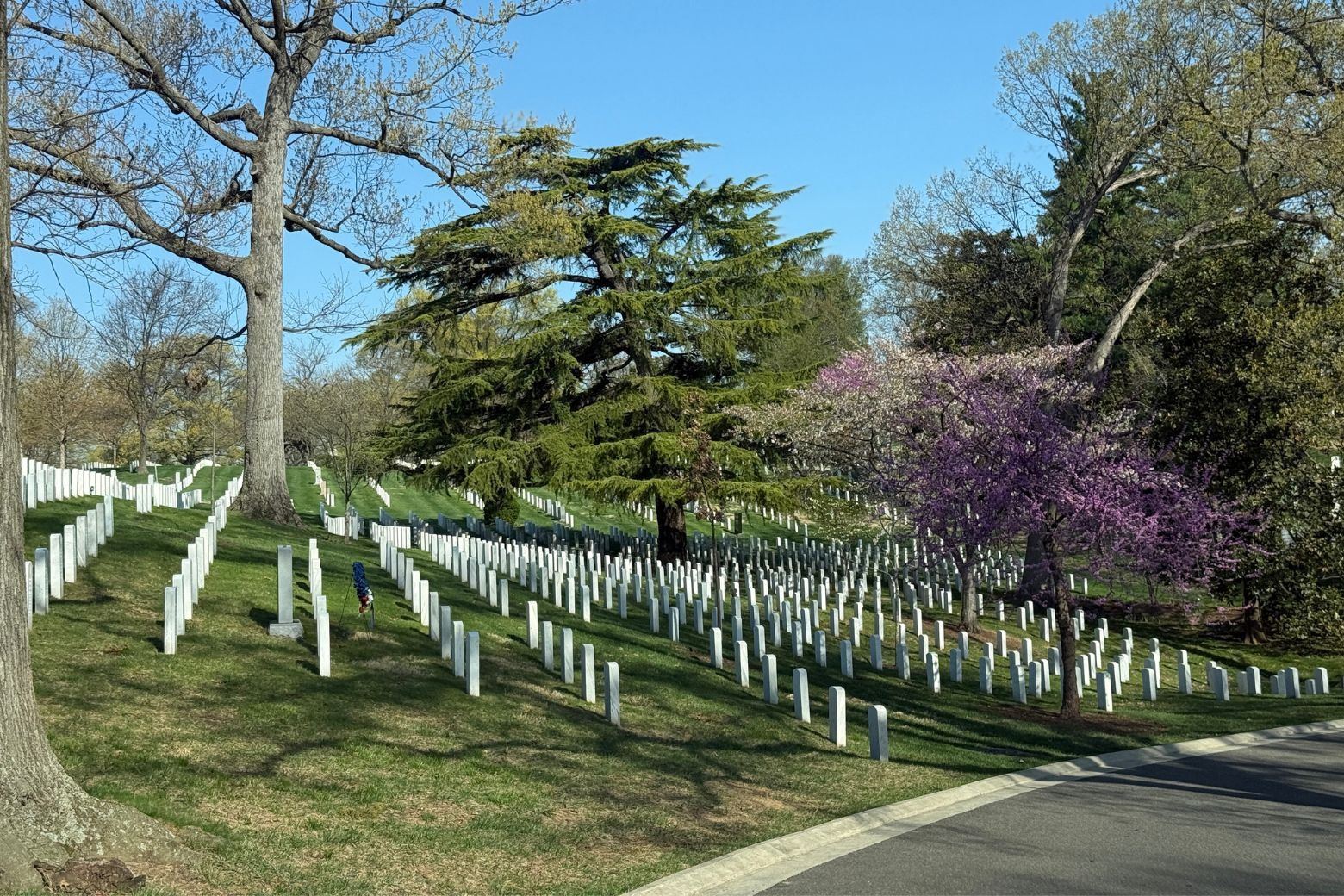
Folks across the D.C. area flock to the Tidal Basin, the U.S. National Arboretum and other parks and green spaces at this time of year to see the beautiful cherry, redbuds and magnolia trees in bloom.
Another place that often makes the spring “must-see trees” lists is Arlington National Cemetery.
It has around 18 species of cherry trees currently in bloom. The cemetery also has mighty oaks, Japanese thunderclouds, empress trees, cryptomeria and lacebark pines.
One man has to watch over the trees and make sure they are kept up all year, because many in his care are living memorials to fallen service members.
Greg Huse is the urban forester at Arlington National Cemetery, where he oversees 300 different species of trees. In total, about 9,800 trees are in his care.
“You get a really great overview of lots of different types of tree species, and we have plenty of native trees,” Huse told WTOP. “We also have lots of trees from other parts of the world that we have planted. It’s quite a variety of trees.”
Arlington National Cemetery is currently a Level III arboretum. That’s out of a possible four levels on a rating scale created by the Morton Arboretum outside Chicago, Illinois.
“If you’re someone who’s a plant person, who’s very much into the specifics and science of plants, it’s a wonderful place to come and learn about our trees,” Huse said.
“We’re also considered a memorial arboretum. So we consider our trees to be living memorials to our fallen veterans and their family members, as opposed to just the static stone monuments. … They kind of grow and develop over time, really lending a unique character to the cemetery,” Huse said.
The business of trees is far-reaching and expansive. Huse has to coordinate with the cemetery’s engineering team and consider any environmental impacts from a construction or road project.
The often-ancient trees that tower over important memorial and graves need protection during storms. The cemetery has many hills that are targets for lightning strikes.
“Sometimes we just get some pretty crazy lightning and wind and so that kind of lends to tree damage,” Huse said.
To protect some of the bigger trees, the cemetery installs the equivalent of a home or building’s lightning rod.
A metal rod is attached to a tall branch, and is connected via copper wire to a ground rod buried around 10 feet away from the tree. The wire runs along the tree but does not touch it.
“If the lightning hits the tree, it’s going to catch that cable and it’ll go down and be grounded,” Huse said.
(WTOP/Luke Lukert)
(WTOP/Luke Lukert)
(WTOP/Luke Lukert)
(WTOP/Luke Lukert)
Many of his workdays are spent driving and walking the over 600 acres, checking on the health of trees and looking for damaging pests like wood-boring insects, aphids and fungus.
If the top of the tree is brown while the rest remains green, Huse knows it is likely a root problem. If a leaf looks dead and brown at the ends, it might just be a cold injury. Or the leaves might appear wrinkled or cupped, leading Huse to look at possible fungal infections.
“There’s lots of different symptoms that the tree might show us and then I can go and investigate,” Huse said.
Every time a tree is touched, whether it’s pruned, removed, planted, treated for an insect, Huse keeps all records in a database that’s connected to a digital map.
“We have every single tree on the grounds digitally mapped, we can open the map, click on a tree, and it’ll pull up all that information,” Huse said.
Huse is also responsible for leading the cemetery’s memorial arboretum tours in the spring and fall. The two-hour walking tour is focused on the different types of trees at Arlington National Cemetery.
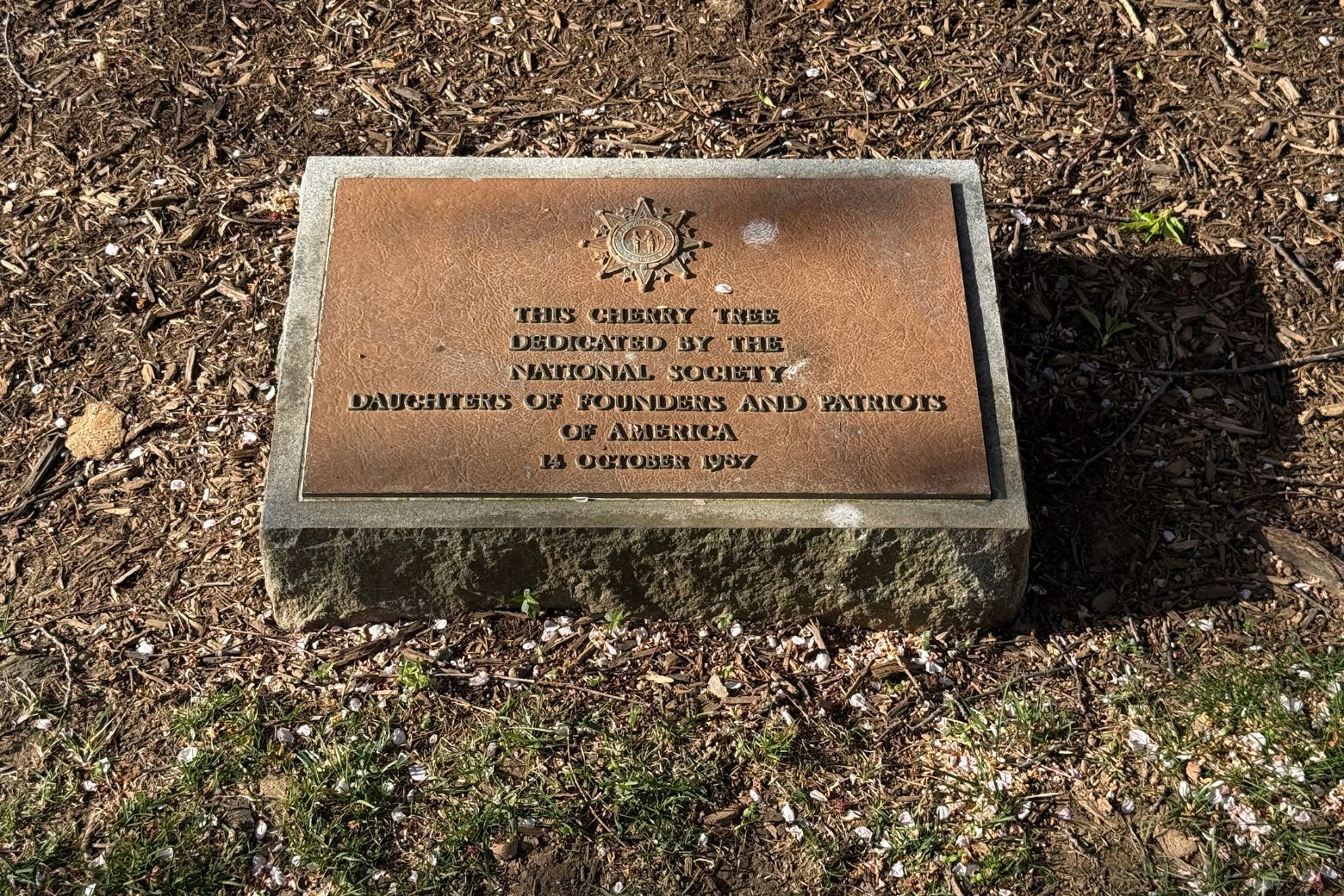
The tour also visits trees that have planted marked as monuments and living memorials. About 140 trees in the cemetery are designated as memorial trees.
“It could be a particular veteran; it could be a particular battle that happened in military history. It could be dedicated to a ship,” Huse said.
Medal of Honor trees are similar but are grown from seeds collected from parent trees located at significant historical military sites, such as battlefields.
Currently there are 36 Medal of Honor trees scattered throughout the cemetery.
The cemetery started with 50 of the trees, honoring native species from all 50 states, but Huse said certain trees native to places like Alaska, Hawaii or the Arizona desert do not do well in the Northern Virginia climate.
Arboretum tours will be held on April 24, May 1 and May 8.
Get breaking news and daily headlines delivered to your email inbox by signing up here.
© 2026 WTOP. All Rights Reserved. This website is not intended for users located within the European Economic Area.
About the Author

Discover more from USA NEWS
Subscribe to get the latest posts sent to your email.


