A terraced Mexican cemetery at night with hundreds of marigolds and shimmering candles. A tableau vivant with eight framed Frida Kahlos in guises inspired by her self-portraits. A darkened, empty stage with just Kahlo and Diego Rivera and their stark shadows looming behind them.
These are just some of the arresting sights in Lyric Opera of Chicago’s stunning staging of Gabriela Lena Frank’s “El último sueño de Frida y Diego (The Last Dream of Frida and Diego),” with its mix of religion, folklore and magic realism. The 2022 opera opened Saturday and runs through April 4.
The vivid visuals by set designer Jorge Ballina are particularly important in this opera, which focuses on the two married Mexican painters who were acclaimed figures in 20th-century art, with Kahlo in recent decades morphing into a feminist icon and pop culture star. (A few people in the audience even wore headdresses and other apparel inspired by her distinctive look.)
“El último sueño de Frida y Diego”
In this staging by Mexico City director Lorena Maza that debuted at the San Diego Opera as part of a co-production with the San Francisco Opera, the scenery merges alchemically with the music, words and performances for a haunting, transporting and deeply affecting operatic experience.
“Frida y Diego” revolves around the Day of the Dead, or Día de los Muertos, a Mexican holiday that draws on Indigenous beliefs and Catholic traditions not to mourn the dead but to celebrate their lives. On Nov. 2 — All Souls Day in the Catholic Church — families spend the night in cemeteries decorated with marigolds (the traditional flowers of the dead), sugar skulls and cardboard skeletons.
It is just such a cemetery scene that dramatically opens the opera. At the top of the terraced rows of marigolds, crosses and decorative skulls, Rivera stands in front of an ofrenda, or shrine, to Kahlo with one of her framed self-portraits and a single candle. Gradually, other candles are lit until the entire once-dark stage is full of the tiny bobbing lights.
The story of “Frida y Diego,” with its powerful libretto by Pulitzer Prize-winning playwright Nilo Cruz, is built on the idea of the dead being able to come back from the underworld to visit their loved ones for one night on the Day of the Dead.
Set in 1957, three years after Kahlo’s death, the opera begins as the still-grieving, ailing Rivera calls out to Kahlo to return, but she resists because of the couple’s tumultuous marriage and the constant pain she endured from a devastating bus accident when she was 18. She eventually relents, and the two ultimately return to the underworld together — finally at peace.
In the 53-year-old California composer’s impressive first foray into opera, Frank has conjured an evocative, highly distinctive score beautifully brought to life by the Lyric Opera Orchestra and Mexican-born conductor Roberto Kalb.
Bringing together piano, celeste, gongs and myriad other percussion with traditional orchestral instruments, Frank draws forth a rich palette of sometimes hard-to-identify, discordant sounds. The music can be spooky and foreboding with rumbling marimba runs, shrill piccolo blasts and alien-sounding trumpet lines or moving and reflective with gently cascading harp or searching clarinet.
Intrinsic to this opera is the first-rate Lyric Opera Chorus, which is almost a constant presence, either seen on stage or heard offstage, helping to shape the opera’s reverential, almost sacred feel at times. Sometimes these singers are part of the action as cemeterygoers or underworld denizens, but other times they act as a kind of Greek chorus, prodding or commenting on all that is happening.
The cast is uniformly superb. Mexican baritone Alfredo Daza, who has portrayed Diego twice before and displays an obvious feel for the role, convincingly conveys the aging artist’s world-weariness with his fine acting and nuanced singing.
Argentine mezzo-soprano Daniela Mack brings equal conviction to the role of Kahlo, imbuing her with a clear sense of presence even as the strong-minded artist wrestles with doubt. Mack is a thoughtful, subtle singer with an especially expressive bottom register.
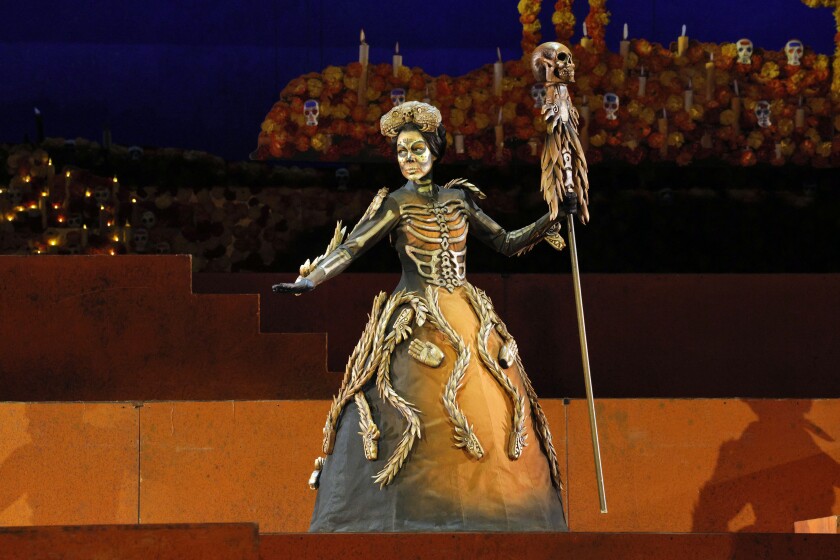
Nearly stealing the show is Lyric regular Ana María Martínez as Catrina, keeper of the dead. She handles the character’s high-flying vocal acrobatics, crusty demeanor and occasional acerbic wit with flair and gamely pulls off her odd, twitchy movement.
Catrina’s skull-topped staff and dress, which is decorated with a skeleton motif across the bodice and what appears to be spider-leg appliques down the wide skirt, is just one of the many sartorial triumphs of designer Eloise Kazan, whose costumes greatly add to this production’s success.
Also deserving mention is countertenor Key’mon Murrah, who brings a gentle, poignant touch to Leonardo, a deceased actor in the underworld who impersonates Greta Garbo. This unlikely character befriends Kahlo and has the important task of persuading her to return to the living world.
About the Author

Discover more from USA NEWS
Subscribe to get the latest posts sent to your email.