
State Rep. Robin Bartleman said she’ll never forget February 16, 2025, when she heard the Amber Alert for a missing 4-year-old Tamarac girl named Seraphine Gingles.
“As a mother, I pay attention to every Amber Alert that comes through, and I say a prayer,” she recalled Monday. “I had hoped for a positive outcome.”
She did not get one.
Police say Seraphine had been kidnapped by her father, Nathan Gingles, who took her along for a murder spree that claimed the lives of her mother, Mary Gingles; grandfather, David Ponzer; and Andrew Ferrin, a neighbor whose home Mary had fled to for safety.
Family Photos
Family Photos Mary Gingles, David Ponzer, Andrew Ferrin
“Seraphine was found physically safe, but suffered life changing trauma,” said Bartleman.
Now she’s asking her fellow legislators to try to prevent that from happening again.
Monday, Bartleman was backed by several domestic violence victims and advocates as she unveiled a bill that would require police to confiscate guns from accused domestic abusers who are served injunctions. If they fail to surrender weapons and there’s probable cause they’re hiding them, the bill requires a judge to issue a search warrant to seize them.
Ballistic records reveal the gun used to kill the three in Tamarac had been confiscated from Nathan Gingles the previous year, but returned after Mary dismissed the first domestic violence injunction against him in July, satisfied a no-harmful-contact order from the judge would suffice while their divorce ensued.
But, Mary alleged in a second petition for injunction, Gingles then planted a tracker on her car, stole memory cards form her surveillance cameras, broke into the house he was ordered to stay away from, and placed what her lawyer called a “kill kit” in the garage with materials and instructions Gingles feared he would use to kill her.
It quickly became clear to the deputy who served Gingles his second domestic violence injunction outside his apartment on Jan. 6, 2025, that, as he told Gingles, “You’ve done this before.”
“Once is enough,” he replied.
As the deputy started to read the restrictions – “again with a restraining order, same as the last restraining order” – Gingles cut him off, saying, “No guns no …”
“You hit the nail on the head,” the deputy continued. “No guns, no ammunition, nothing like that.”
The injunction specifically said Gingles “shall not use or posses a firearm or ammunition” and “shall surrender and firearms and ammunition” to law enforcement.
But, Bartleman said the “loophole” is “the injunction doesn’t have teeth behind it,” that there’s no mechanism in the law forcing the person to turn over weapons or require law enforcement to seek a warrant if he or she does not.
“The problem is these orders are issued, and depending on the law enforcement agency, it could just mean you go to the door and say, ‘Please give us your guns,’” said Bartleman (D-Broward). “And if they refuse, what do you do? What if you know there are guns in that house and you’re the victim and the person didn’t self-surrender? It’s kind of ridiculous if you think about it.”
In the aftermath of the murders, Broward’s sheriff admitted a series of errors by his department both in its response that day and its investigation of calls from Gingles in the prior months. The agency fired or suspended several deputies.
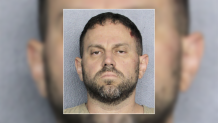
Broward Sheriff’s Office
Broward Sheriff’s Office Nathan Gingles
But BSO found no fault with the deputy who served Gingles and he was cleared in an internal investigation.
In a statement to NBC6 Monday, the department said “per BSO policy, when BSO deputies serve domestic violence injunctions, deputies inquire whether the subject possesses firearms, ammunition or a concealed weapons permit, if so directed by the order.”
Attorney Kelley Joseph, who represented Mary Gingles in the divorce and in seeking the injunctions, spoke beside Bartleman and other victims, saying, “I believe that this bill will save lives.”
“Mary did everything right. She filed all the right motions. We got all the right orders. And in the end, it didn’t matter. It was just a piece of paper,” she said. “Mary screamed from the hilltops for help. She asked everybody and anybody.”
Bartleman said she simply took provisions from Florida’s “red flag” law – allowing gun seizures from those judged to be a danger – and moved them to the domestic violence statute.
“The law already grants the judge the ability to say, you are too dangerous for a gun,” she said. “This simply says, we’re going to go get your guns now.”
The bill, an identical version of which was filed in the Senate by Sen. Tina Scott Polsky (D-Broward/Palm Beach), also increases the charge level for someone violating an injunction once after one prior conviction from a misdemeanor to a third-degree felony. Currently it takes two subsequent violations to get a felony charge.
Also speaking in support Monday was Dr. Linda Parker, who heads Broward’s domestic violence center, Women In Distress. She said the number of high-risk cases in Broward has increased 66 percent since 2023 and a law like this “would make a huge difference” in protecting victims of domestic violence.
“We know that access to firearms plays a large role in intimate partner violence and death,’ Parker said. “A victim or survivor of intimate partner violence is five times more likely to die when an abusive partner has access to a gun.”
And in a testament to how domestic violence can spill outside the home, to tragic effect, the uncle of the neighbor who was killed in Tamarac, Andrew Ferrin, spoke as well.
“The reasons that we’re all here today is to try to strengthen up the actual laws for domestic violence, especially pertaining to guns,” said George David, holding a photo of his nephew. “I’ve seen the devastation of what those guns have done, and it’s a horrible, terrible thing.”
About the Author

Discover more from USA NEWS
Subscribe to get the latest posts sent to your email.


