
Work on the wildlife crossing spanning the 101 Freeway in Agoura Hills will require a road closure this week.
Agoura Road will be from 7 a.m. to 5 p.m. Wednesday between Rondell Street and Hydepark Drive, according to Caltrans. The closure will allow crews to place concrete.
Through traffic will not be permitted during the closure, including drivers, cyclists and walkers
Free shuttle service will operate every 30 minutes from 7 a.m. to 5 p.m. Wednesday to help pedestrians and cyclists travel around the closed section of Agoura Road.
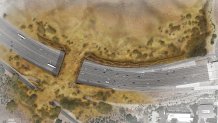
When complete, the structure will offer a landscaped path for mountain lions and other animals to cross the busy 101 Freeway northwest of Los Angeles. The additional span over the two-lane road next to the freeway is much smaller than the bridge over the freeway, but more complex due to the earthwork required for its foundation and the surrounding habitat.
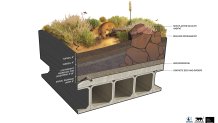
The largest bridge of its kind in the world will feature a nearly 1-acre native wildlife habitat on about 6,000 cubic yards of soil.
Construction began on Earth Day 2022 and is scheduled to be completed in 2026.
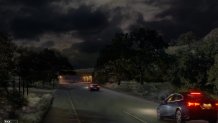
Coastal sage scrub plant species native to the Santa Monica Mountains will fill much of the bridge. It’s part of a broader ecological restoration strategy that will revitalize an additional 12 acres of open space that requires 50,000 native plants, trees, shrubs and perennials.
Over the last few years, the wildlife crossing’s dedicated native plant nursery has hand-picked more than 1.1. million hyper-local native seeds, representing more than 50 distinct native plant species in the Santa Monica Mountains.

Nursery staff have also started growing plants and tree species such as coast live oak trees, valley oak, toyon, ceanothus, several sages, California buckwheat and the flowering penstemon, among others.
Native vegetation will help reduce fire risk and better support wildlife. Crews are expected to implement a full irrigation and sprinkler system as part of the crossing.
A live feed of the construction site over the 101 Freeway in Agoura Hills is available here.
Why is the 101 Freeway wildlife crossing being built?
It is estimated that the mountain lion population in the Santa Monica Mountains could become extinct within 50 years without an influx of genetic diversity. The lions are largely isolated due to freeways that act as barriers to movement across the region.
Conservationists hope the $85 million crossing will alleviate the problem.
The star of the fundraising campaign was mountain lion P-22. Famous for traveling across two freeways and making a huge Los Angeles park his home, the big cat became a symbol of the shrinking genetic diversity of wild animals that must remain all but trapped by sprawling development or risk becoming roadkill.
Vehicles and toxicants, like rat poisons, are two of the biggest threats to mountain lions in Southern California.
Scientists tracking cougars fitted with GPS collars found over decades that roadways are largely confining animals in mountains that run along the Malibu coast and across the middle of LA to Griffith Park, where P-22 settled.
The idea isn’t new, but what makes this project different is that it’s over one of the busiest freeways in the world. The bridge will stretch 200 feet above 10 highway lanes and a feeder road just 35 miles northwest of downtown Los Angeles.
The $90 million price tag will be covered by about 60% private donations, with the rest coming from public funds set aside for conservation purposes. The span will be named the Wallis Annenberg Wildlife Crossing, for the philanthropist whose foundation donated $25 million.
Wildlife crossings — bridges and tunnels — are common in western Europe and Canada. A famous one in Banff National Park in Alberta spans the Trans-Canada Highway and is frequently used by bears, moose and elk.
The Los Angeles-area bridge has enjoyed nearly universal support, unusual for a public works project. The draft environmental impact document received nearly 9,000 comments — with only 15 opposed, according to the wildlife federation.
There are about 4,000 to 6,000 mountain lions in California, but wildlife officials call that a crude estimate without an ongoing statewide study. More than half of the state is considered prime habitat for the big cats, which can be found wherever deer are present.
The California Department of Fish and Wildlife receives hundreds of mountain lion sighting reports each year. Few result in mountain lions being identified as posing an imminent threat to public safety, the department said. Mountain lion attacks on humans are extremely rare and their nature is to avoid humans.
About the Author

Discover more from USA NEWS
Subscribe to get the latest posts sent to your email.


