
Civil rights leader Rev. Jesse Jackson leaves behind a lasting impact on the D.C. area, which began during the Civil Rights Movement.
In 1963, he saw Dr. Martin Luther King Jr.’s “I Have a Dream” speech. Jackson went on to become a long-time fixture in Washington, D.C. He bought a house in LeDroit Park from Howard University in the 1980s.
Jackson’s passion for equality brought him back to D.C. over the years for events such as the Million Man March and the 40th anniversary of the March on Washington.
Jackson’s dedication to D.C. and statehood efforts for the District went beyond just advocacy. In 1990, he became the first elected shadow senator for the District and held that position until 1997, giving the shadow delegation national attention and legitimacy.
“I was honored to work alongside him during his service as D.C.’s Shadow Senator and throughout his lifelong fight for equality and democracy,” D.C. Del. Eleanor Holmes Norton said in a statement Tuesday.
“In his years representing the District, Rev. Jackson stood firmly for D.C. statehood and full self‑governance,” Holmes Norton’s statement continued. “He recognized that the denial of representation to D.C. residents was a civil rights issue at the heart of America’s unfinished democratic promise.”
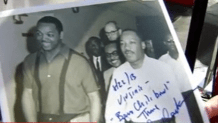
Jackson was well-known at Ben’s Chili Bowl on U Street, where a photo of him with Dr. King still hangs today.
“I think because the ownership is kind,” Jackson said of Ben’s. “Some people can’t pay and they feed people. They care for people. I think it’s the kind of, it’s an oasis in the desert.”
Jackson was here in 2016 for the dedication of the Smithsonian’s National Museum of African American History and Culture (NMAAHC).
“It is with deep sadness that we mourn the passing of civil rights leader, Baptist minister, humanitarian, and two-time Democratic presidential candidate Jesse Jackson,” said Shanita Brackett, NMAAHC acting director. “As a lifelong champion of human rights and social justice, Jackson rose to become one of the nation’s foremost religious and political figures and one of the most iconic figures in the latter 20th century. During his life of service, Jackson was often the great unifier leading the charge to galvanize people together across race, gender, class, and beliefs.”
Many in Southeast D.C. remember when Jackson went to the Anacostia Arts Center, offering to have his Rainbow PUSH Coalition help activists east of the river.
Jackson also spoke fondly of legendary News4 anchor Jim Vance after Vance passed away in 2017.
“He really was an international journalist on a local station. People around the whole world knew Jim Vance because he set the pace,” Jackson said. “… He never lost his credibility.”
In 2014, when thousands attended the funeral of Marion Barry, Jackson honored D.C.’s “mayor for life.”
“You got the crown full of jewels,” Jackson said. “You’re still leading. We’re right behind you. We won’t be long.”
Perhaps one of his biggest honors here was when Jackson received the Medal of Freedom from President Bill Clinton, who said, “No words could add to the distinction of the men and women being honored today.”

Jackson’s family says public observances will be held in Chicago, adding that other arrangements for his celebration of life will be released by the Rainbow PUSH coalition.
About the Author

Discover more from USA NEWS
Subscribe to get the latest posts sent to your email.


