
Free-solo climber Alex Honnold is set to livestream a ropeless climb up one of the world’s tallest skyscrapers this weekend, a stunt that has renewed attention on the decade-old brain scans that suggested he processes fear differently than most people.
Newsweek reached out to several cognitive neuroscientists for comment via email.
Why It Matters
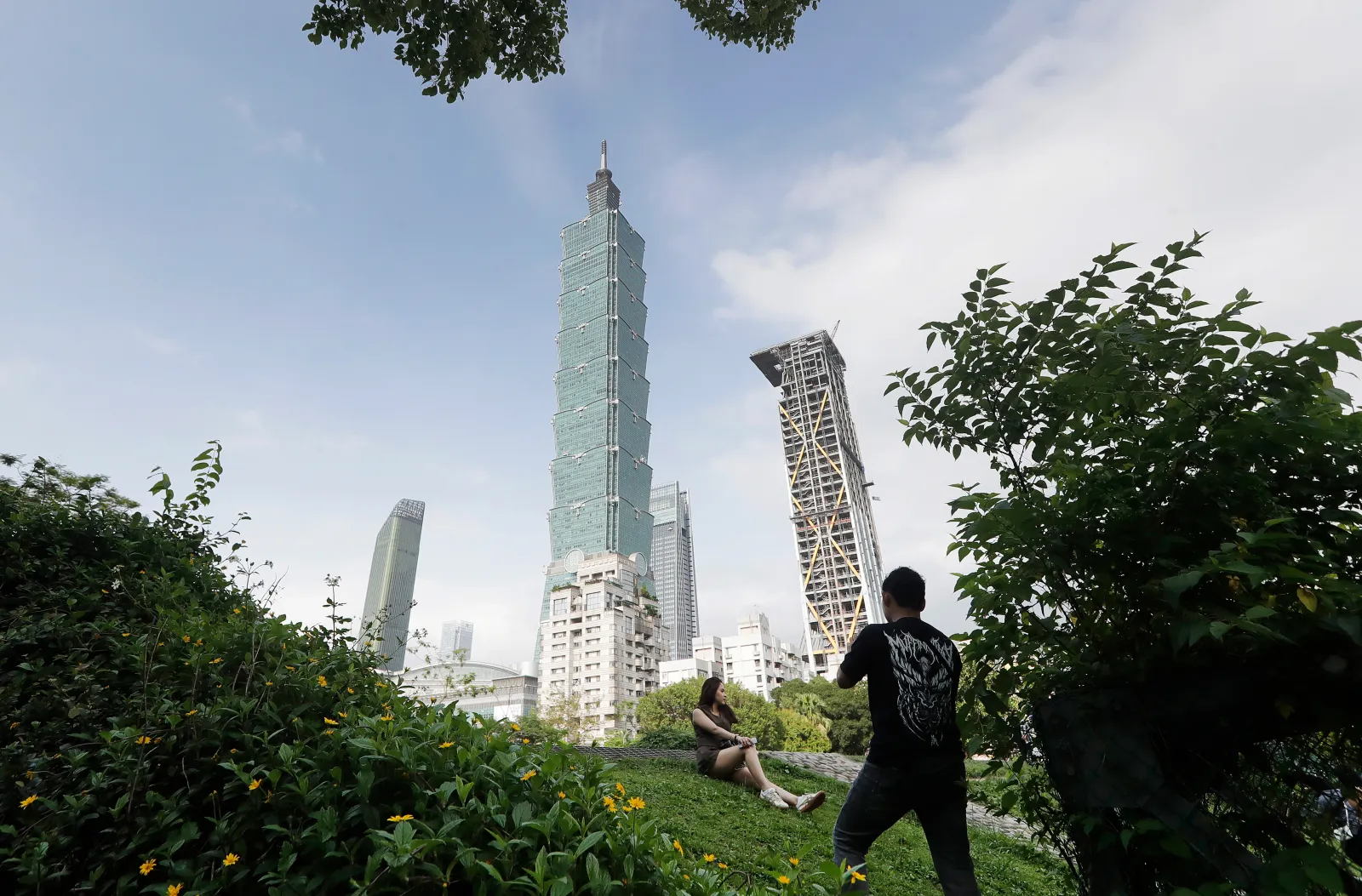
The world-record climber is scheduled to scale Taipei 101, which is 101 stories—about 1,667 feet tall—without any safety nets or ropes on Saturday local time. It’s among the world’s tallest buildings.
In 2016, Honnold, 40, underwent a functional MRI (fMRI) scan as researchers explored whether his brain responds to fear-inducing images differently than most people—a question fueled by his willingness to climb towering rock faces without a rope or safety gear.
The amygdala is a key part of the brain involved in fear, helping detect potential threats and rapidly trigger emotional and physical responses. Those can include feelings of fear or anxiety and the body’s stress reaction. The prefrontal cortex and other brain regions help interpret those signals and regulate a person’s response.
What To Know
The legendary climber who has completed incredibly dangerous feats is set for another one, live on Saturday local time, or Friday evening stateside. Back in 2016, Dr. Jane Joseph, cognitive neuroscientist at the Medical University of South Carolina, conducted a scan of Honnold’s brain.
The results were published in Nautilus, finding that Honnold has an amygdala but it reacted at a lower level compared with the control subject, another male rock climber of a similar age.
“Maybe his amygdala is not firing—he’s having no internal reactions to these stimuli,” Joseph told Nautilus in 2016. “But it could be the case that he has such a well-honed regulatory system that he can say, ‘OK, I’m feeling all this stuff, my amygdala is going off,’ but his frontal cortex is just so powerful that it can calm him down.”
When both men were shown images designed to provoke a response, the comparison subject’s amygdala showed strong activity on the scans, while Honnold’s showed little to none. In a separate task involving monetary rewards, the comparison subject again showed broad activation in brain regions linked to emotion and reward, while Honnold’s activity was largely limited to areas that process visual input.
While Honnold’s brain structure appears typical, the 2016 scan suggests his brain is less likely than most people’s to activate in response to certain fear-related stimuli and he’s a high-sensation seeker.
In the Netflix trailer for his Taipei 101 climb, he says, “I think I’ve gotten used to fear over the years. It’s an ever-present part of climbing.” He is known for his incredible ascent up Yosemite National Park’s El Capitan without any ropes, as documented in Free Solo.
Dr. Tali Sharot, professor of cognitive neuroscience and director of the Affective Brain Lab at University College London, told Newsweek in a Thursday night email that while she has not seen his scans, “it seems perfectly reasonable that his amygdala will show less activation than the average brain. The amygdala is involved in emotional arousal – both in response to positive and negative events/stimuli. It is indeed central to the fear response.”
Sharot added, “You need to have a muted fear/arousal response to be able to pull off the kind of thing he does,” adding that “how active your amygdala is is partially a result of genetics, but it is also associated with experience.”
What People Are Saying
Honnold, on the Rich Roll podcast in October: “With enough exposure to a certain stimulus, you desensitize yourself to it. And so, it’s not that my amygdala doesn’t fire, it’s that my amygdala wasn’t firing for that level of stimulus. People always like to see someone doing something outlandish or different and they’re like, ‘well that must be because they’re just fundamentally different’… but they could do that too if they worked hard at it for a very long time.”
Taiwanese rock climber Chin Tzu-hsiang, to ABC News: “For Alex Honnold to finish the climb, it’s like he’s helping us fulfill our dream.”
James Smith, executive with event producer Plimsoll Productions, to ABC News: “This will be the highest, the biggest urban free solo ever. So we’re kind of writing history and those events, I think, have to be broadcast and watched live.”
What Happens Next
Honnold’s climb will be livestreamed globally on Netflix, starting at 8 p.m. ET Friday. The feat will depend on weather conditions, per ABC News.
About the Author

Discover more from USA NEWS
Subscribe to get the latest posts sent to your email.


