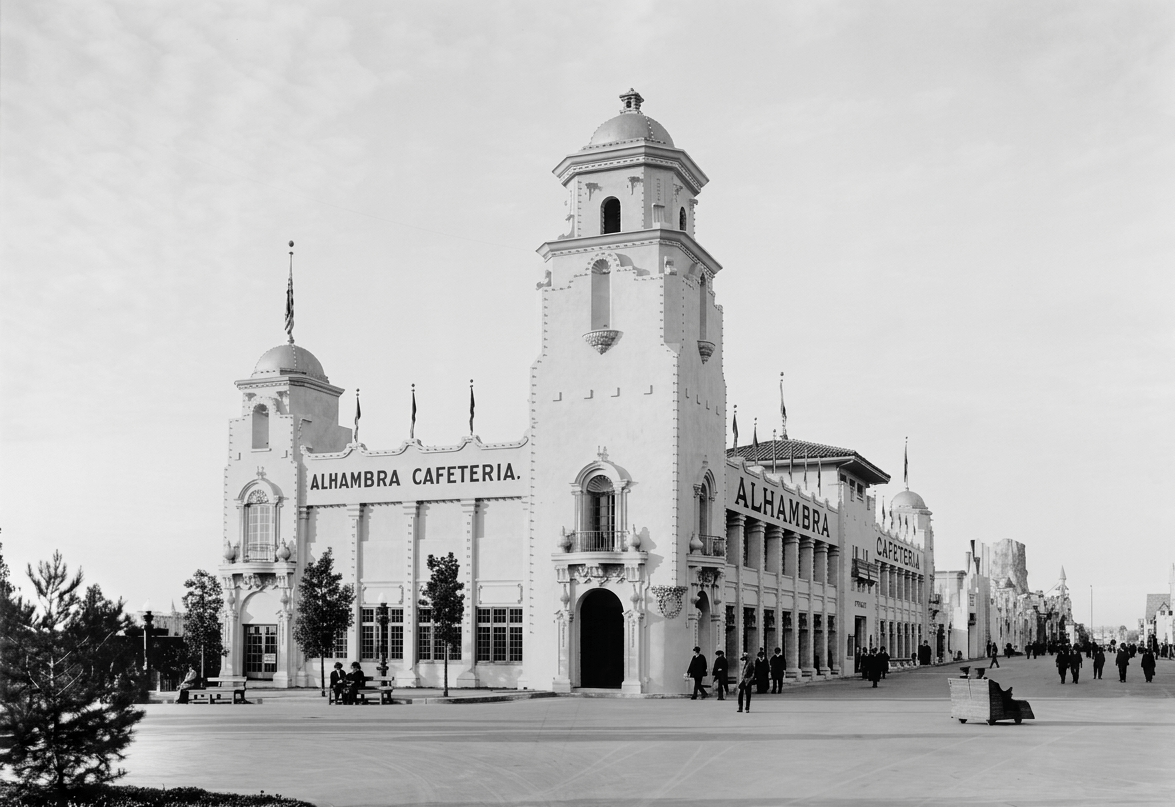
Part one in a four-part series.
Downtown San Diego’s dining culture did not begin as a destination scene. It began as a necessity.
In the late 1800s and early 1900s, food service in San Diego was scattered across boarding houses, early hotels and small cafés that emerged alongside the city’s growing commercial core. There was no centralized dining district—only meals shaped by movement, work and proximity.
As the city grew, those scattered spaces began to organize into something more recognizable.
Early public dining takes shape
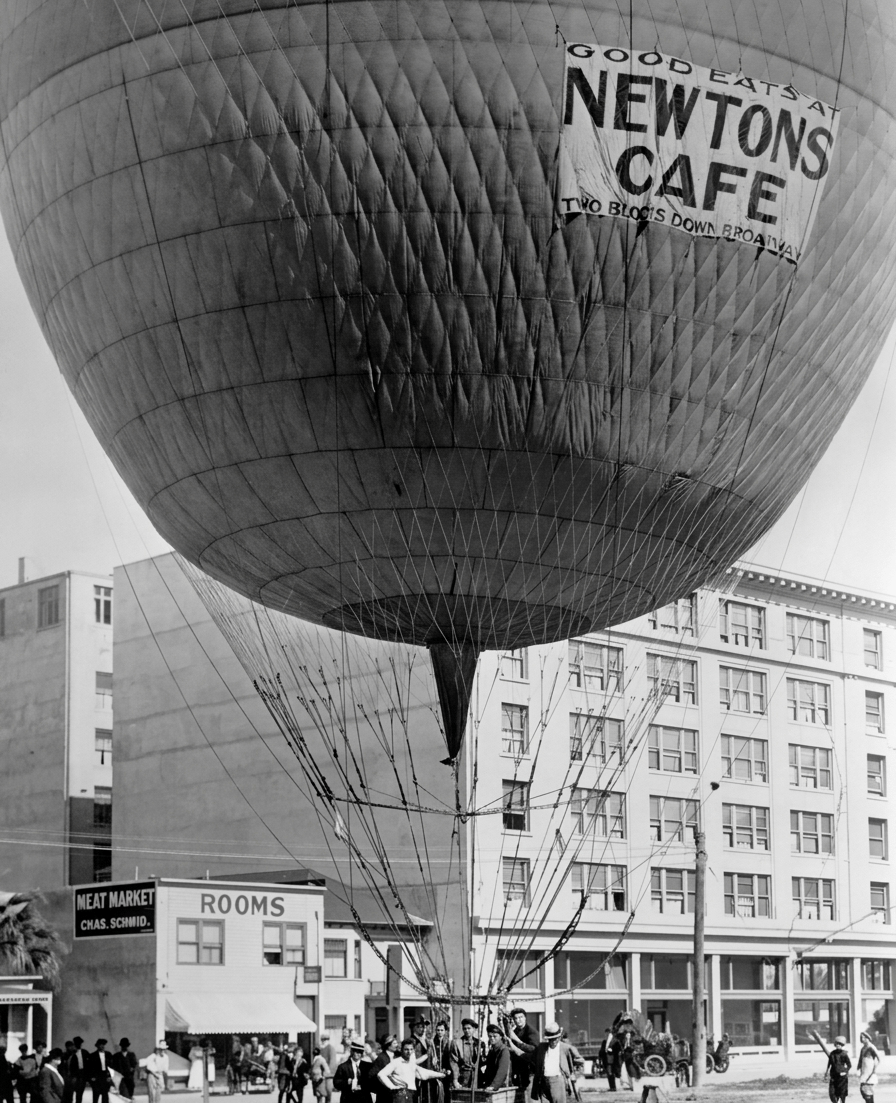
By the time of the 1915 Panama-California Exposition, San Diego was beginning to present itself as both a city and a destination. Food became part of that experience.
Cafés like Newton Café were not just places to eat—they were part of a growing commercial identity, tied to tourism, visibility and movement. Advertising, even in unconventional forms like a tethered balloon, reflected a city beginning to think about how food fit into public life.
A walkable café city
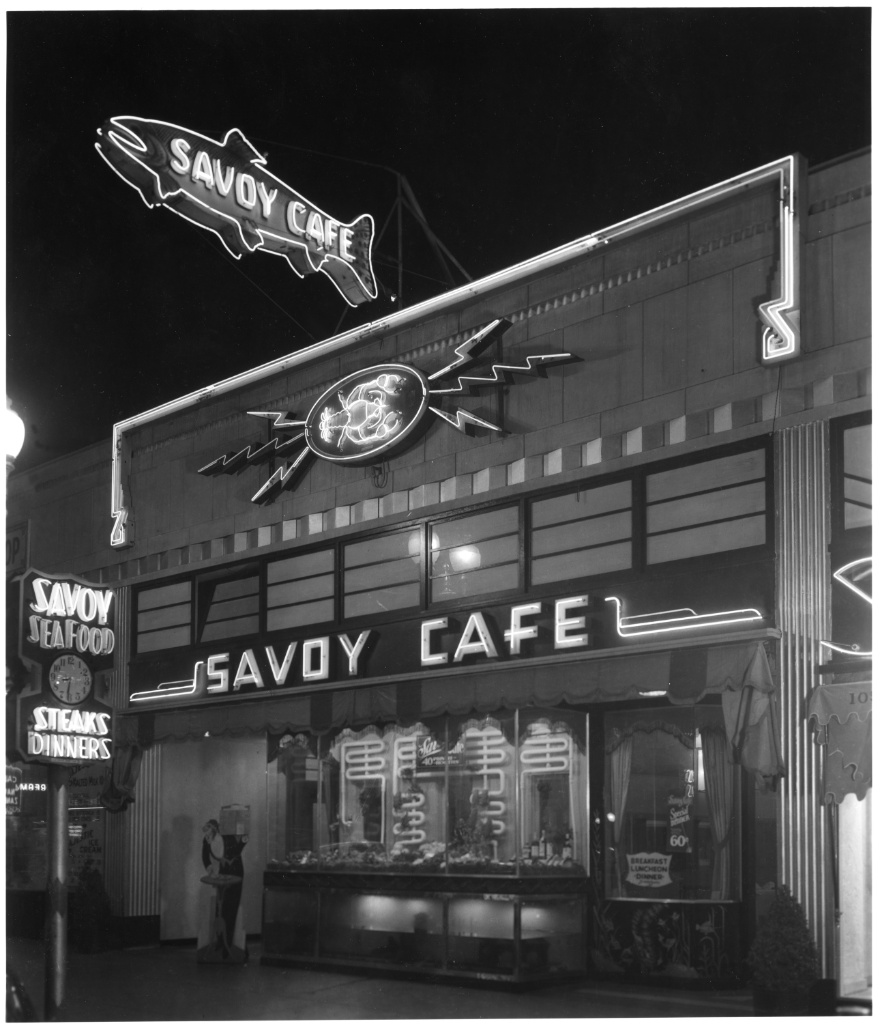
By the 1920s and 1930s, downtown San Diego had developed a dense network of cafés, lunch counters and small eateries that served workers, shoppers and theatergoers moving through a compact city center.
Places like Savoy Café became part of the daily rhythm. Meals were quick, affordable and repeated—taken between errands, before shows or during a workday break.
Restaurants were not destinations. They were part of the street itself.
Everyday dining, everyday places

Other establishments, including The Vegetarian Café and Bakery, reflected the variety already emerging within this early dining culture. Even at this stage, San Diego’s food scene was not entirely uniform—there were signs of experimentation alongside tradition.
Together, these cafés formed a practical food system built on proximity and routine.
Neighborhoods and the edges of downtown

Beyond the downtown core, cafés and small restaurants extended into surrounding areas, connecting neighborhoods through similar patterns of accessible, informal dining.
These spaces maintained the same essential function: dependable places to eat within a city that still largely moved on foot, even as early signs of change began to appear.
A shift toward the roadside

By the early 1930s, San Diego’s dining landscape was already beginning to change.
While downtown cafés continued to anchor daily life, places like Thelma’s Dash Inn point to an early shift away from a purely walkable food culture. The presence of automobiles—parked directly outside—signalled a new relationship between dining and movement.
These roadside establishments were not yet full drive-ins, but they marked a transition. Food was beginning to adapt to cars, distance and a city that was slowly expanding beyond its original core.
Downtown San Diego’s early restaurants formed more than a collection of places to eat. They created a system—one built on proximity, routine and a shared urban center.
But that system would not remain intact.
In the decades that followed, the rise of the automobile would reshape not just where people ate, but how the city itself functioned.
Read more history stories here; send an email to Debbiesklar@cox.net
Sources:
San Diego History Center Archives — photographs, ephemera and historical image collections.
San Diego Public Library Special Collections — city directories, archival records and local history files.
San Diego Union & Evening Tribune Archives — restaurant listings and advertisements (via California Digital Newspaper Collection/Newspapers.com)
California Digital Newspaper Collection (UC Riverside) — historical café and downtown business references.
Old Town San Diego State Historic Park — interpretive materials and early food service context.
Regional historical and academic studies on San Diego urban development patterns.
About the Author

Discover more from USA NEWS
Subscribe to get the latest posts sent to your email.