“On rare public land in one of Manhattan’s most densely populated zip codes, the city selected a smaller, less equitable plan that sidelines a community-driven alternative that produces more housing and services.”

At a recent speech marking his first 100 days in office, Mayor Mamdani promised to govern in the interest of the many, not the few—and pointed to building supportive housing in Harlem as proof.
Yet that promise is now being tested.
In March, the New York City Council voted to demolish a health center in Harlem without seriously considering a community-driven alternative that proposes more homes, adds essential services, and builds a better future for Harlem and the city.
This, to be clear, is not another development dispute, but the latest iteration in a historical pattern: large-scale demolition, promises made to Harlem, and promises silently broken—this time in a process that raises serious questions about whether decisions were made for the many, or just by a few.
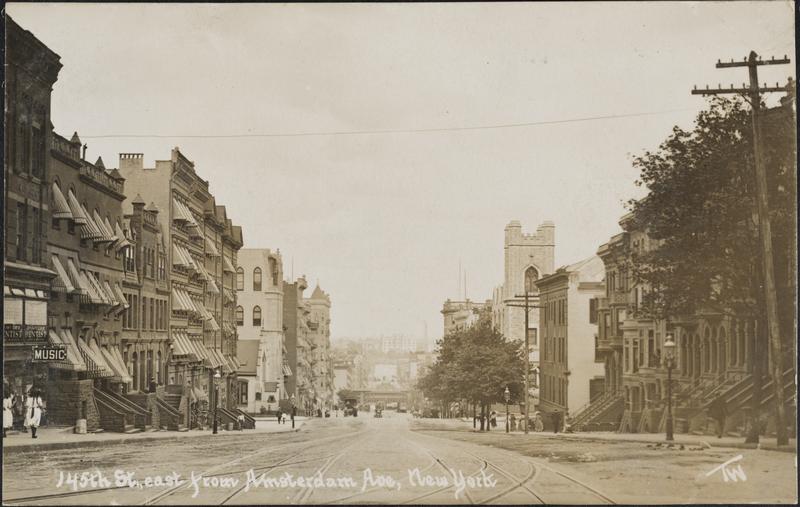
The commercial corridor and residences between West 145th and 146th streets on Amsterdam Avenue were first condemned and demolished in 1970. But that contentious decision came with a promise: a state-of-the-art, community-centered health facility. In 1969, community organizers Emma Bowen and William Hatcher made sure the facility did not become another version of “separate but equal,” rejecting plans that marginalized Harlem residents.
Yet despite the facility’s completion in 1973, it remained closed for years, opening fully only in 1978 with funds from New York State. By then, nearby Logan Hospital had closed, and the new health center on West 145th Street and Amsterdam Avenue replaced the lost services.
There is no evading the uncomfortable truth that New York City’s Health and Hospitals Corporation (HHC) opposed community-operated healthcare from the start—delaying the center’s opening, withholding support, repeatedly attempting to push out the providers who sustained it. In response, Bowen and Hatcher’s extraordinary organizations built a Federally Qualified Health Center offering comprehensive services—mental health and substance abuse counseling, dentistry, primary care, HIV services, and more—serving 22 zip codes across Manhattan and the Bronx.
Even as it expanded, the healthcare center at 1727 Amsterdam Ave. endured decades of municipal disinvestment. Still, it stood as a rare institution: a community-operated health center that served predominantly Black and Latino New Yorkers, most of whom rely on Medicaid and live within the vicinity.
In 2019, a new plan materialized to demolish the health center and replace it with housing. Certain elected officials, including Comptroller Mark Levine—then the local Council member—endorsed its framework. It finally appeared that HHC might achieve what it had sought since 1978: to eradicate community-based providers from a site they had nursed against all odds.
An opaque and erratic public process followed, shaped by a few decision-makers largely separated from the local community. First, COVID-19 disrupted timelines, even as health center staff served on the frontlines. Next, community healthcare providers were forced into protracted negotiations and ongoing eviction proceedings. And in 2022, residents learned—belatedly—that the health center was to be demolished when soil sample drills arrived.
Immediately, Community Board 9 (CB9) requested the standard land use review process (ULURP) required for development on city-owned land. The city denied that request. Only in 2025, after sustained pressure, was the review granted—at which point, the outcome had largely been predetermined. The plan approved by the City Council on March 25 is nearly identical to the one first advanced in 2019. Last week, despite repeated requests, key financial and planning documents were not made available prior to a public hearing. A process determined by a few, without full disclosure, is no substitute for meaningful public review by the many.
These difficulties get to the heart of the matter: whether decisions about public land were made in the open, for the many—or behind closed doors, for the few.
But there’s more. Since 2022, CB9 has advanced a compelling alternative plan, developed in public, responsive to community needs, capable of delivering more housing and providing essential services. The difference is decisive. The community plan delivers 250 units, including 150 family-sized apartments. The approved plan prioritizes studios—137 of them—while offering just 31 family-sized units. At a moment when New York faces a crisis of family homelessness and affordability, that is not a design decision. It is a policy decision—with consequences for who gets to stay in Harlem.
The community plan also includes 60,000 square feet of retail and community space, compared to only 20,000 in the approved plan. The community plan directly addresses the need for supportive housing for individuals experiencing homelessness alongside mental illness and substance abuse disorder, and the crisis affecting roughly 154,000 homeless students in New York City’s public schools, by building more homes and significantly more space for services.
Yet this alternative—more homes, more family-sized units, more community services—was never meaningfully evaluated in a transparent public process.
To be sure, the current health center—degraded by decades of disinvestment—requires more than minor renovation, and new construction is most certainly welcome. But displacement is not inevitable. The providers displaced by the current plan serve a population that is 95 percent Black and Latino, largely low-income, and deeply reliant on these services, a setback that reverses the progress towards racial and healthcare equity that Bowen and Hatcher championed 50 years ago. The law requires more than a predetermined outcome followed by a procedural formality: it requires a genuine evaluation of options and their consequences.
The choice before us is what kind of future we build—and for whom.
On rare public land in one of Manhattan’s most densely populated zip codes, the city selected a smaller, less equitable plan that sidelines a community-driven alternative that produces more housing and services.
If Mayor Mamdani is serious about governing for the many and not the few—as we believe he is—then both the process and the outcome must reflect those promises. The community proposal does both.
Andres Orejuela is assistant professor of Hispanic Languages and Literatures at Bard High School Early College, Bronx. He is a public member of Manhattan Community Board 9.
!(function (f, b, e, v, n, t, s) {
if (f.fbq) return; n = f.fbq = function () { n.callMethod ? n.callMethod.apply(n, arguments) : n.queue.push(arguments); };
if (!f._fbq) f._fbq = n; n.push = n; n.loaded = !0; n.version = “2.0”; n.queue = [];
t = b.createElement(e); t.async = !0; t.src = v; s = b.getElementsByTagName(e)[0]; s.parentNode.insertBefore(t, s);
})(window, document, “script”, “https://connect.facebook.net/en_US/fbevents.js”);
fbq(“init”, “606610964404175”);
fbq(“track”, “PageView”);
About the Author

Discover more from USA NEWS
Subscribe to get the latest posts sent to your email.