
Advertisement
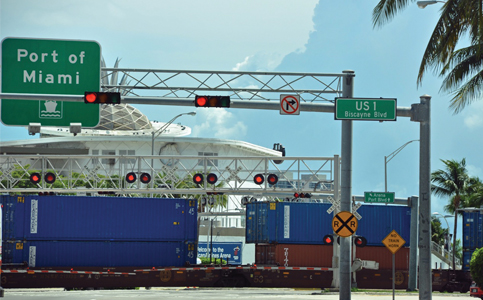
PortMiami is still pursuing an expansion of its on-dock rail, according to Director Hydi Webb.
The Florida East Coast Railway (FECR) freight rail system provides for the Port of Miami, Port Everglades and the Port of Palm Beach, connecting to the national railway system in Jacksonville. After years of inactivity following Hurricane Wilma in 2005, the railway was rebuilt in November 2013 with a $50 million project from Miami-Dade County that included restoration of the mainline rail that connects Miami to the port, a rehabilitation of the damaged rail bridge, restorations of the connection to CSX and Norfolk Southern railway systems, and an update to the Hialeah rail yard.
PortMiami received a $16 million grant from the U.S. Department of Transportation’s RAISE program in 2022 to help the port with sustainability.
“We did receive a federal grant for that expansion, and we’re looking at increasing our trackage on port, as well as the infrastructure, hybrid infrastructure to move the containers on and off of the rail as well,” Ms. Webb said.
She told Miami Today in 2024 that rail cargo is expected to multiply, with rail expansion to be completed by 2027.
“It’s [the amount of cargo by rail] expected to grow,” said Ms. Webb. “We see the volume growing, we see the benefits of it. Number one is there’s going to be a reduction of emissions, and it’s going to be less congestion on our interstate highway system by moving things by rail. We’re all about connectivity, and how we connect the port to the mainland into the hinterlands. You can access the port by water, by truck, and by rail.”
The rail service allows containerized cargo to reach 70% of the U.S. population in one to four days. Other major cities in the Southeast are reachable by rail within 10 hours to three days. For example, the time to market for cargo is one day to Orlando, two days to Atlanta and Charlotte, NC, and three days to Memphis and Nashville in Tennessee.
<!--
(function(d, s, id) {
  var js, fjs = d.getElementsByTagName(s)[0];
  if (d.getElementById(id)) return;
  js = d.createElement(s); js.id = id;
  js.src = "//connect.facebook.net/en_US/all.js#xfbml=1";
  fjs.parentNode.insertBefore(js, fjs);
}(document, 'script', 'facebook-jssdk'));
// -->
About the Author

Discover more from USA NEWS
Subscribe to get the latest posts sent to your email.


