
The Republican leaders of the Senate and House Armed Services committees have raised concerns about President Donald Trump’s plan to withdraw U.S. troops from Germany, a key ally of the North Atlantic Treaty Organization (NATO).
They warned in a Saturday statement that reducing U.S. forces in Europe would send the wrong message to Russian President Vladimir Putin in his war against Ukraine and weaken collective deterrence.
The president’s plan comes amid growing strain between Washington and European allies over security and defense burden-sharing. This week, Trump launched a fresh verbal attack on German Chancellor Friedrich Merz, shortly after threatening to reduce the number of American troops on German soil. Merz had said the White House is being “humiliated” amid its ongoing war against Iran.
What To Know
“We are very concerned by the decision to withdraw a U.S. brigade from Germany,” Senator Roger Wicker, a Mississippi Republican, and Representative Mike Rogers, an Alabama Republican, said in a joint statement.
Newsweek has reach out to Rogers’ and Wicker’s press teams for comment via email on Saturday.
Wicker and Rogers oversee the Senate and House Armed Services Committees, respectively. The statement continued, “Prematurely reducing America’s forward presence in Europe before those capabilities are fully realized risks undermining deterrence and sending the wrong signal to Vladimir Putin.”
The lawmakers argue that “rather than withdrawing forces from the continent altogether, it is in the US interest to maintain a strong deterrent in Europe by moving these 5,000 US forces to the east.”
A statement from the Pentagon obtained by Newsweek said about 5,000 personnel would be pulled from bases in Germany due to the country’s lack of support for the U.S. war in Iran and “follows a thorough review of the Department’s force posture in Europe and is in recognition of theater requirements and conditions on the ground. We expect the withdrawal to be completed over the next six to twelve months.”
Some troops may return to the U.S. and then be redeployed elsewhere in the world, including the Indo-Pacific region, according to CBS News, which also said one combat team will be impacted by the withdrawal, while another battalion meant for deployment later this year will now be reassigned.
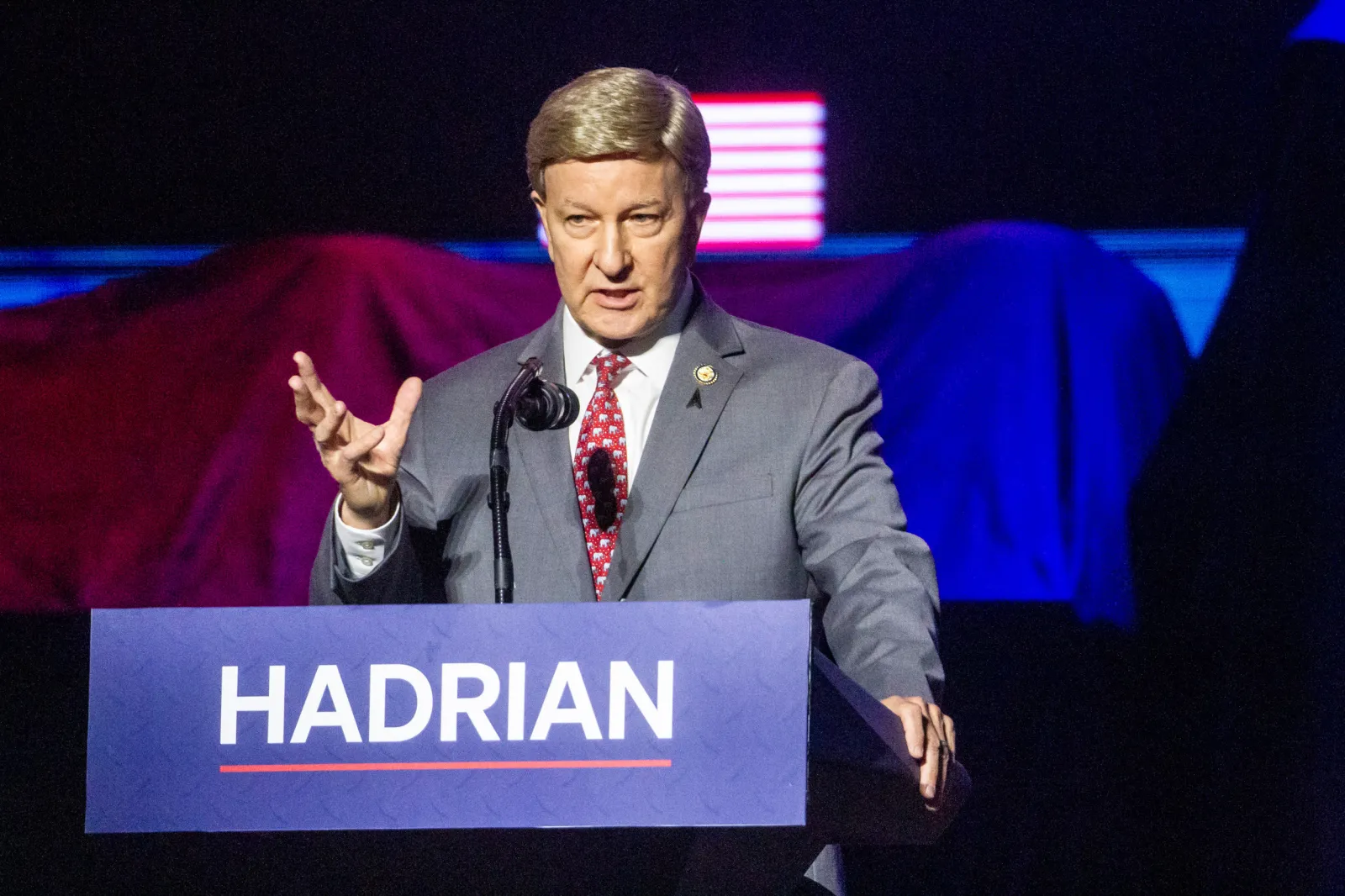
German Federal Minister of Defense, Boris Pistorius, previously told Newsweek the “presence of American troops in Europe, particularly in Germany, serves the interests of both the U.S. and ourselves,” citing collaboration in Ramstein, Grafenwöhr, Frankfurt.
Rogers and Wicker concluded their statement writing, “Finally, any significant change to U.S. force posture in Europe warrants a deliberate review process and close coordination with Congress and our allies. We expect the Department to engage with its oversight committees in the days and weeks ahead on this decision and its implications for U.S. deterrence and transatlantic security.”
Trump told reporters Thursday that U.S. troop presence in Spain and Italy could also be reduced. He has repeatedly criticized NATO members for falling short on defense commitments and for what he calls a lopsided reliance on U.S. military protection.
On Saturday, Pistorius said that “it was anticipated that the U.S. might withdraw troops from Europe, including Germany,” adding that “if we are to remain transatlantic, we must strengthen the European pillar within NATO.”
The Republican lawmakers’ statement comes nearly three months into the Iran war, which remains broadly unpopular among Americans, with most disapproving of the conflict, according to recent polls.
A recent ABC News/Washington Post/Ipsos poll of 2,560 people found that 61 percent of Americans believe it was a mistake for Trump to start the war.
Republicans largely back Trump’s decision, with 79 percent supporting it; however, support drops among “non-MAGA Republicans,” with 50 percent believing it was the right decision, while 86 percent of MAGA Republicans do.
Democrats overwhelmingly oppose it, with 91 percent saying it was a mistake. Seventy-one percent of independents do as well. The poll was conducted between April 24 and 28, with a margin of error of plus or minus 2 percentage points. The poll was conducted between April 24 and 28, with a margin of error of plus or minus 2 percentage points.
What Happens Next
The troop withdrawal is expected to be completed over the next six to 12 months.
About the Author

Discover more from USA NEWS
Subscribe to get the latest posts sent to your email.


